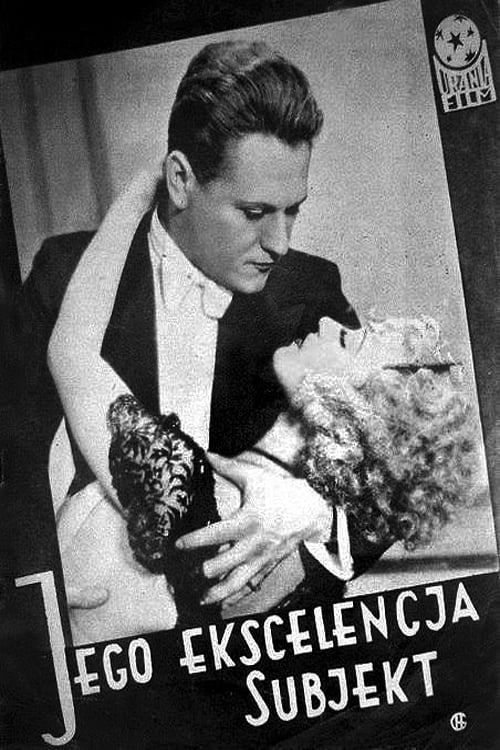
Ekscelencja Jurek
1933
No user ratings available yet
Representation score: 1.0 out of 10
Representation Score
Fair
1933
Director
Janusz Warnecki, Mieczysław Krawicz
Runtime
80 minutes
Average Rating
No ratings yetNew Showbiz Analysis
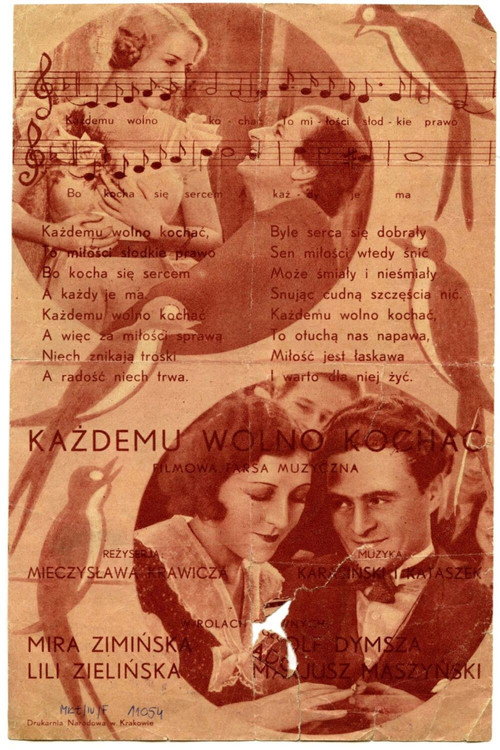
Anybody Can Love is a product of its time, adhering to the romantic comedy conventions of 1930s Europe. The narrative hinges on traditional hierarchies where social status and marriage resolve conflicts. The film lacks diverse representation, focusing instead on a singular cultural viewpoint. While it touches on class and institutional instability, these elements serve the plot's comedic needs rather than offering critical commentary. Ultimately, the film upholds conventional social structures, using gendered conflicts and class distinctions to propel a standard tale of professional success and romantic victory.
Category Breakdown
The film centers on a heterosexual relationship between Alojzy and Renata. There are no representations of same-sex relationships or non-cisgender identities.
Renata plays a significant role in the romantic storyline but her influence is constrained by traditional marriage structures. She reciprocates love but has limited control over her fate.
Given its setting in 1930s Poland, the cast is predominantly of the same ethnicity. The film reflects a culturally uniform environment typical of its time.
The story examines class differences between musicians and wealthy butchers. It highlights social mobility through talent but does not critically address broader class structures.
Mental health issues are used humorously when Alojzy is mistakenly hospitalized. This portrayal lacks depth and relies on situational irony.
Present on Screen
Limited or Absent
Official Synopsis
Poor musician Alojzy Kędziorek is in love with Sagankiewicz's daughter Renata, who is reciprocated, but her family wants to marry her off to the wealthy butcher Baleron. Hipek, Alojzy's friend, sells his song to the theater director. The song becomes a huge hit. Alojzy is mistakenly locked up in a newly opened psychiatric hospital. He manages to escape. He goes to the theater where his song is being sung. He receives thunderous applause and an order for new songs. Renata's family agrees to her marriage to Kędziorek.
1933

1937

1935

1933

1935

1929
1942

1937
No reviews yet. Be the first to share your thoughts on this movie!
Use the rating form above to leave a star rating and optional review.