Schuss!
2005
No user ratings available yet
Diversity score: 5.9 out of 10
2004
Director
Joaquín Jordá
Runtime
117 minutes
Average Rating
No ratings yetSynopsis
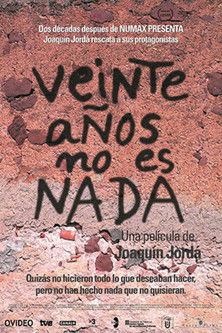
The self-management experience of the workers of the Numax factory in Barcelona (Spain), at the end of the seventies, was included in a documentary that they themselves decided to entrust to the filmmaker Joaquim Jordà at the moment when the factory were about to close. It was titled "Numax presents..." (1980). Those images, recovered, together with the situation in which those same workers are so many years later, lead us to reflect on the last and intense decades that have been lived in Spain, to discover the fragility of youth ideals and offer a history of the political transition from dictatorship to democracy.
Overall Score
Fair
Category Breakdown
LGBTQ+ Representation
The film explores the social liberalization of Spain's transition to democracy. However, there is no explicit evidence of centering LGBTQ+ identities or non-cisnormative narratives within the documentary.
Gender Representation
The focus on worker self-management suggests a disruption of traditional patriarchal hierarchies. The narrative likely explores women's roles within industrial decision-making and economic agency during this era.
Racial & Ethnic Diversity
As a localized study of a Barcelona factory, the subjects likely reflect the demographic homogeneity of the period. The film does not use diverse casting as a primary narrative driver.
Religious & Cultural Diversity
The documentary excels by centering working-class voices and critiquing capitalist structures. It uses the Numax factory experience to question the stability of the political transition from dictatorship to democracy.
Disability Representation
There is no specific mention of subjects navigating physical or neurodivergent disabilities. The available information provides no basis for evaluating this category.
Strengths
Areas for Improvement
AI Analysis
Joaquín Jordá’s documentary serves as a sociological inquiry into the Spanish labor movement. It prioritizes collective agency and the lived experiences of the Numax factory workers over individualist hero narratives. The film's strength lies in its cultural framing, which challenges institutional stability and traditional power structures. By juxtaposing past ideals with present realities, it offers a critique of the transition from dictatorship to democracy. While the film lacks explicit focus on contemporary identity politics like LGBTQ+ or racial diversity, it fundamentally disrupts hierarchies by centering the working class and their self-management experiments.
2005

2005
1967

2018
2017
2015

1967
1968

1995

2021

2024

2014
No reviews yet. Be the first to share your thoughts on this movie!
Use the rating form above to leave a star rating and optional review.