Betrayal
1994
No user ratings available yet
Representation score: 4.5 out of 10
Representation Score
Fair
2017
Director
Hannes Obens, Claudia Morar
Runtime
86 minutes
Average Rating
No ratings yetNew Showbiz Analysis
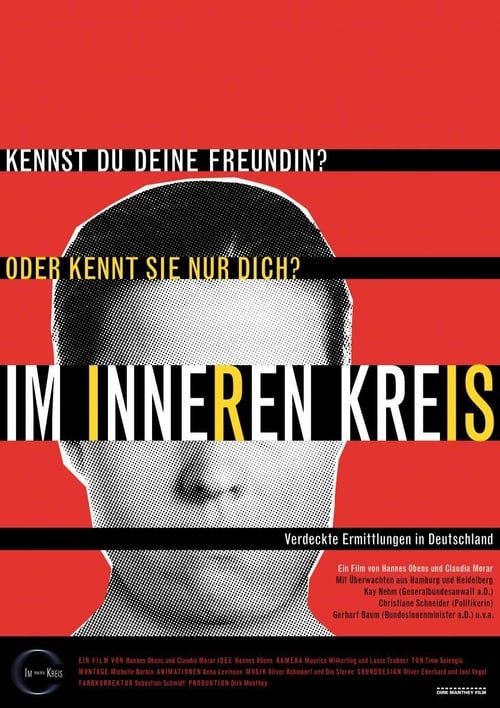
Into the Circle provides a compelling look at the erosion of personal privacy through the lens of undercover policing. Its main strength lies in deconstructing the relationship between individuals and the state, particularly how surveillance can destabilize social subcultures. By focusing on Iris P., the film highlights the profound psychological impact of maintaining a dual identity over many years. However, the film lacks visible evidence of racial or disability representation, and its focus remains limited to specific German political landscapes.
Category Breakdown
The film explores intimate relationships within the Hamburg left-wing scene. Although specific LGBTQ identities are not named, the narrative highlights connections that exist outside traditional heterosexual norms.
The documentary centers on the female protagonist Iris P., highlighting her psychological journey as she maintains a clandestine identity. It challenges typical depictions of security roles by emphasizing her internal struggles.
The film focuses on specific German socio-political landscapes in Hamburg and Heidelberg. There is no indication of a non-white or non-Anglo-Saxon majority cast in the provided material.
The film critiques Western institutions and state surveillance. It portrays the state as a disruptive force that undermines community trust and social cohesion.
There is no specific evidence of physical or neurodivergent disabilities being portrayed in this documentary.
Present on Screen
Limited or Absent
Official Synopsis
The film highlights the diverse psychological and political consequences of covert police operations. The undercover police officer, Iris P., investigated the Hamburg left scene as "Iris Schneider" for nearly six years. She had close friendships, and she had several years of intimate relations with people, who at the same she spied upon. After Iris P. was publicly unmasked in 2014, two more clandestine investigators were revealed as well. However, public surveillance can also affect people who would have considered it impossible. This is illustrated by the case of the police officer Simon B., who enrolled in the University of Heidelberg, to spy out peaceful left-wing students.
1994
2020
2017
2012
2018
2020

2018

2013
No reviews yet. Be the first to share your thoughts on this movie!
Use the rating form above to leave a star rating and optional review.