The Responsive Eye
1965
No user ratings available yet
Representation score: 1.3 out of 10
Representation Score
Fair
1967
Director
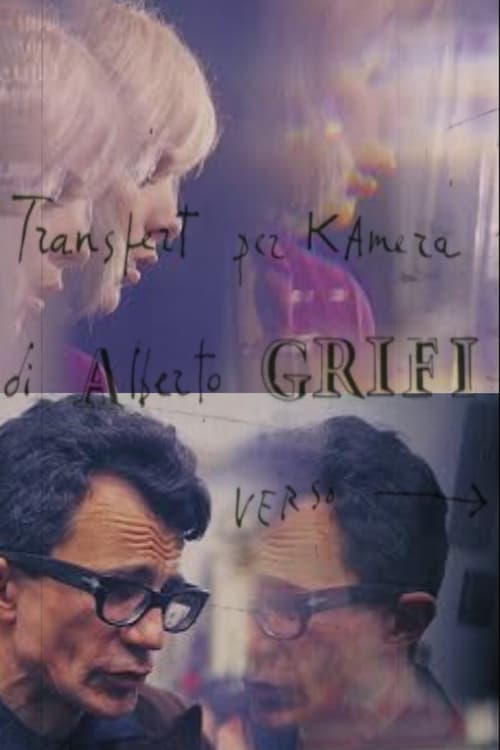
Alberto Grifi
Runtime
16 minutes
Average Rating
No ratings yetNew Showbiz Analysis
Alberto Grifi’s experimental documentary functions more as a philosophical disruption than a character-driven narrative. Its strength lies in its intellectual framework, which uses psychotropic themes to dismantle standard Western epistemologies and sensory constraints. While the film succeeds in cultural subversion, it lacks the explicit character roles or diverse casting necessary to score highly in social representation. It trades traditional identity politics for a universalist, evolutionary perspective. Ultimately, the work is a radical attempt to redefine visual grammar. It moves away from social hierarchies toward a more primal, existential exploration of human perception.
Category Breakdown
The film uses Aldo Braibanti’s theories to introduce subtle hints about non-traditional identities. It focuses on broad perceptions as a metaphor for escaping rigid, straight-centered social structures.
The work emphasizes sensory experience and altered states over traditional social roles. By focusing on a primal, biological view of humanity, it avoids reinforcing standard masculine or feminine stereotypes.
The film operates in an abstract, philosophical realm centered on evolutionary perspectives. It seeks to transcend contemporary social stratification by focusing on animal ancestors and universal imaginaries.
The film offers a strong critique of Western rationalism and organized society. It prioritizes subjective, non-linear experiences over the singular, objective morality found in mainstream media.
The exploration of new geographies of perception touches upon neurodivergent ways of experiencing reality. However, there is no explicit evidence of characters with specific disabilities.
Present on Screen
Limited or Absent
Official Synopsis
On a theatrical work by Aldo Braibanti, the special effects used in an attempt to construct a new visual grammar capable of describing "the new geography of boundless perceptions and imaginaries, the emergence of memories from the very distant phylogenetic past of our animal ancestors, a gift of psychotropic substances."
1965

2019

1969
2020
1969
1986
2002
1976
No reviews yet. Be the first to share your thoughts on this movie!
Use the rating form above to leave a star rating and optional review.