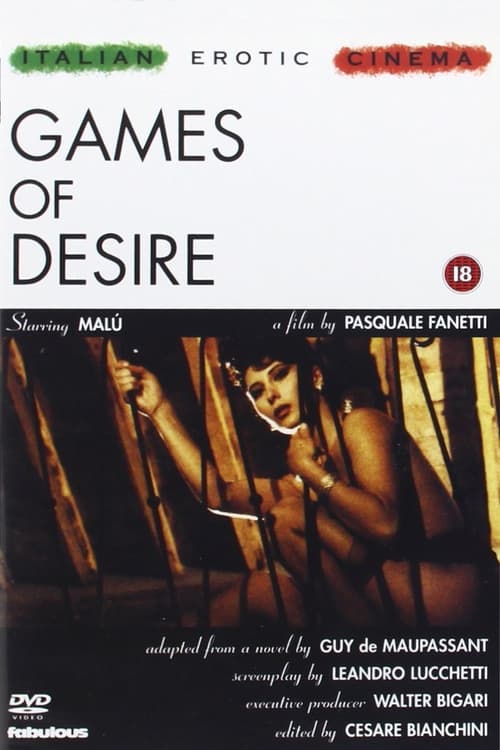
Games of Desire
1991
No user ratings available yet
Diversity score: 3.8 out of 10

1991
NC-17Director
Pasquale Fanetti
Runtime
104 minutes
Average Rating
No ratings yetSynopsis
Joelle lives on a large estate with her crippled husband, Il conte. Just as he begins to feel he can't match up to his wife's sexual needs, his wife's ex-lover, Charles, is released from prison. Her husband invites him to become a groundskeeper on the estate.
Overall Score
Fair
Category Breakdown
LGBTQ+ Representation
The film focuses on heteronormative infidelity rather than queer identities. While it explores sexual liberation and non-traditional relationship structures, it remains within a conventional framework.
Gender Representation
Joelle drives the narrative with high agency, centering female desire. The film subverts patriarchal hierarchies by portraying the male authority figure as physically and psychologically vulnerable.
Racial & Ethnic Diversity
The production focuses on a homogeneous European social stratum. There is no evidence of racial blending or non-white characters in positions of agency within the estate.
Religious & Cultural Diversity
The story critiques the sanctity of the traditional Western family unit. It prioritizes individual fulfillment and situational ethics over rigid religious or moral codes.
Disability Representation
The Count's physical impairment is central to the estate's power dynamics. However, the disability primarily serves as a catalyst for the protagonist's liberation.
Strengths
Areas for Improvement
AI Analysis
The film excels at deconstructing traditional gender hierarchies and patriarchal stability. By centering Joelle's agency and desires, it challenges conventional expectations of masculine leadership and domestic order. However, the narrative lacks significant racial or LGBTQ+ diversity. The setting remains a homogeneous European environment, and the sexual exploration stays within heteronormative boundaries. While the portrayal of disability is nuanced, it risks using the Count's impairment as a mere plot device to facilitate the protagonist's sexual awakening rather than exploring his lived experience.
1991

1999

1984

1991

1984

1985

1971

1990
2016
1971

1968

1993
No reviews yet. Be the first to share your thoughts on this movie!
Use the rating form above to leave a star rating and optional review.