
The Crash
1932
No user ratings available yet
Representation score: 0.4 out of 10
Representation Score
Minimal
1932
ApprovedDirector
Harry Beaumont
Runtime
77 minutes
Average Rating
No ratings yetNew Showbiz Analysis
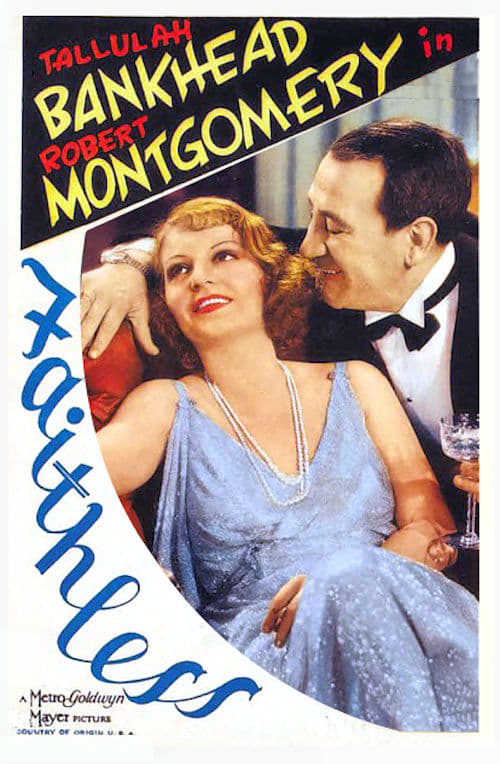
Faithless is a period-typical social drama that emphasizes individual romantic ability to act and class-based escapism. The narrative centers on the interpersonal dynamics of a wealthy socialite, reflecting the standard social hierarchies of the early 1930s studio system. While the female protagonist exhibits a degree of personal control within her social sphere, the film lacks diverse representation. It functions primarily as a character-driven study of wealth and romance rather than a critique of systemic structures. Ultimately, the film adheres to the demographic norms of its era, focusing on a conventional romantic pairing and a homogeneous depiction of high society.
Category Breakdown
The film centers on a traditional heterosexual romance between Carol Morgan and Bill Wade. It does not feature any LGBTQ+ identities or narratives that question the assumption that everyone is straight or cisgender.
Carol Morgan asserts control over her romantic relationship. However, the film likely upholds conventional 1930s gender roles without challenging established hierarchies.
The focus on socialite status implies a predominantly Anglo-Saxon cast typical of the era. The narrative portrays upper-class white society as the norm.
The story uses the Great Depression as a backdrop for escapism. It highlights social hierarchies without critiquing the system or wealth distribution.
There is no information about characters with visible or invisible disabilities.
Present on Screen
Limited or Absent
Official Synopsis
Socialite Carol Morgan romps through the Depression and her wealth while breaking up with Bill Wade and getting back together with him.
1932

1933
1933

1928
1931

1932

1931
1931
No reviews yet. Be the first to share your thoughts on this movie!
Use the rating form above to leave a star rating and optional review.