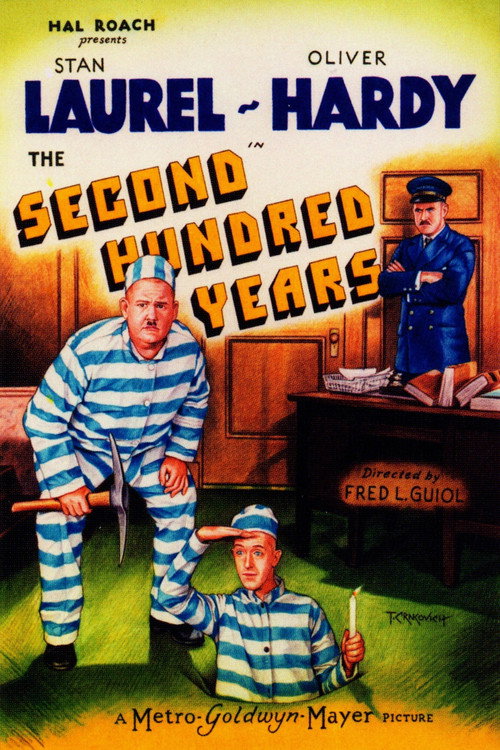
The Second 100 Years
1927
No user ratings available yet
Representation score: 3.1 out of 10
Representation Score
Minimal
1934
NRDirector
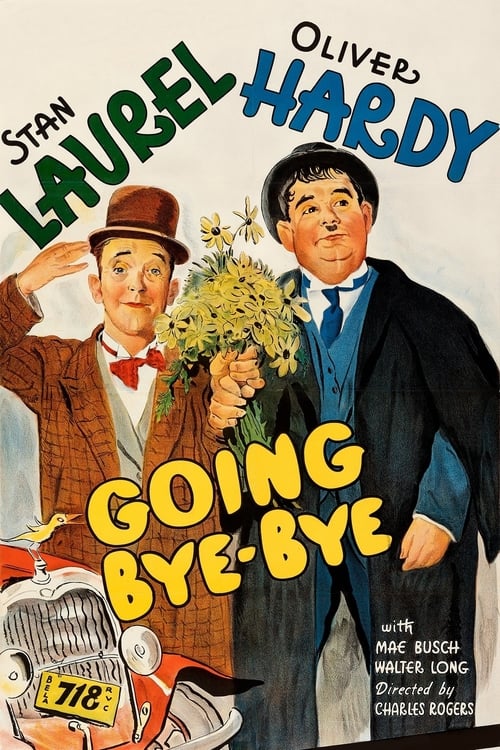
Charley Rogers
Runtime
21 minutes
Average Rating
No ratings yetNew Showbiz Analysis
Going Bye-Bye! is a product of its era, utilizing standard slapstick clichés that reinforce rather than challenge 1930s social hierarchies. The narrative relies on physical gag mechanics and situational irony characteristic of the Laurel and Hardy comedic personas. The film lacks intentionality regarding diverse representation or disrupting traditional norms. It functions as a traditional comedic loop centered on individual vengeance and physical mishaps. Ultimately, the work adheres to the conventional casting and structural patterns of early 20th-century studio comedies, offering little sociological commentary.
Category Breakdown
The film centers on comedic conflicts that assume everyone is straight and cisgender. It does not include any non-cisgender identities or critique heteronormativity.
The female character mainly serves as a plot device to help the antagonist hide. The narrative emphasizes traditional 1930s gender roles, positioning women as domestic figures.
The cast follows the homogeneous casting patterns typical of 1930s studio productions. The narrative does not highlight ethnic diversity among the characters.
The story operates within conventional moral structures of justice and retribution. It uses standard Western institutions like courtrooms as settings for physical comedy.
There is no indication of characters with visible or invisible disabilities. Comedy is derived from situational errors rather than the lived experiences of those with impairments.
Present on Screen
Limited or Absent
Official Synopsis
In a packed courtroom, Butch Long vows revenge on 'squealers' Laurel and Hardy whose evidence has helped to send him to prison. Frightened, the boys plan to leave town and advertise for someone to share expenses with them. The woman who answers the ad is actually Butch's girlfriend. Meanwhile Butch escapes and hides in a trunk in his girlfriend's apartment where he gets locked inside. Not realizing who it is, Stan and Ollie finally manage to get the trunk open and then Butch exacts his revenge.
1927

1933
1934
1931
1931
1931

1934
1920
No reviews yet. Be the first to share your thoughts on this movie!
Use the rating form above to leave a star rating and optional review.