
The Woman from Beirut
1965
No user ratings available yet
Representation score: 5.0 out of 10
Representation Score
Limited
1954
Director
Pierre Chevalier
Runtime
88 minutes
Average Rating
No ratings yetNew Showbiz Analysis
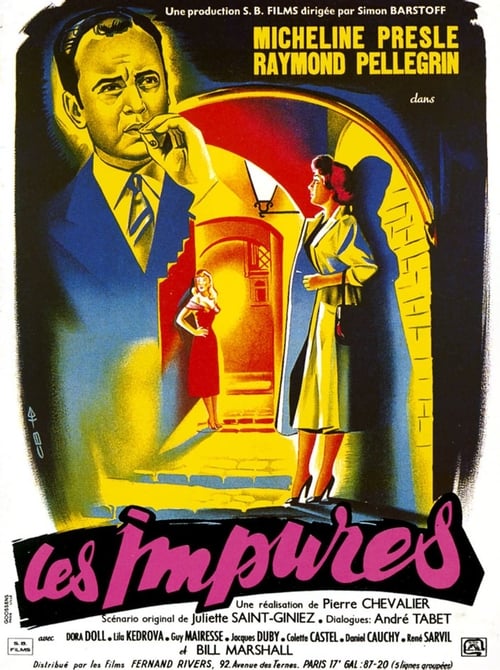
The Impure Ones functions as a typical mid-century social drama. It provides character complexity by focusing on individuals who operate outside conventional social respectability, such as a former prisoner and a nightclub singer. However, the film adheres to the traditional structural frameworks of its era. It does not fundamentally challenge gender hierarchies or prioritize diverse identities, often defaulting to the male protagonist as the central figure of change. While the plot addresses systemic issues like human trafficking, the representation of race and culture remains secondary to the central moral struggle of the protagonists.
Category Breakdown
The film focuses on a heterosexual relationship between Mario and Michèle. There is no indication of LGBTQ+ identities or perspectives in the narrative.
Michèle supports her sister economically by working, showing her independence. However, Mario is portrayed as the primary protector, reinforcing traditional masculine roles.
The story touches on international exploitation and connections to Tangier. However, the specific racial makeup of the cast and the depth of ethnic representation are not clearly defined.
The film explores a morally ambiguous landscape by centering a former prisoner. It critiques corrupt institutions through its depiction of a human trafficking syndicate.
The narrative does not include any characters with physical, sensory, or neurodivergent disabilities.
Present on Screen
Limited or Absent
Official Synopsis
When Mario, a bad boy, is released from prison, he plans to live honestly with his wife Geneviève. But the latter has not waited for him and Mario, out of spite, accepts to work as a tout for Mr. Charlie, the boss of a white slave trade gang. His first assignment consists in seducing Michèle, a Montmartre nightclub singer and hostess, into signing a contract for Tangier. The young woman, however, who does this job only to support her young sister Danièle, falls for him and he for her. From then on Mario, without betraying himself, does his utmost to save Michèle -and Danièle for that matter - from the clutches of the gang...
1965

1952
1951
1931
1946
1949
1959

1964
No reviews yet. Be the first to share your thoughts on this movie!
Use the rating form above to leave a star rating and optional review.