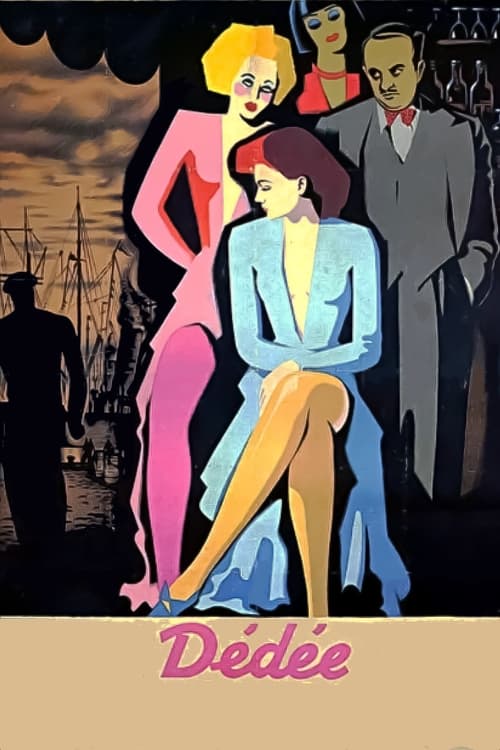
Dedee
1948
No user ratings available yet
Representation score: 5.2 out of 10
Representation Score
Fair
1943
Director
Adolfo Best-Maugard
Runtime
70 minutes
Average Rating
No ratings yetNew Showbiz Analysis
The film serves as a character study that examines social stratification and the tension between urban and rural identities. By centering the plot on a underrepresented woman, it avoids sanitizing urban life and explores ability to act outside of conventional institutions. While the film offers a meaningful exploration of gendered power dynamics and social hierarchy, it lacks overt the way different parts of someone's identity overlap. The narrative remains focused on a traditional romantic structure and does not provide evidence of LGBTQ+ identities or disability representation. Ultimately, the work provides a complex look at survival and interpersonal loyalty within a low-class cabaret setting, critiquing exploitative power dynamics through its depiction of urban social structures.
Category Breakdown
The film follows traditional structures centered around heterosexual relationships. The main romance focuses solely on the bond between a female lead and a male newcomer.
Camelia challenges traditional gender roles by acting as a provider and protector for Guillermo. She plays a significant role in driving the story, reversing the usual dynamic where the male figure typically stabilizes the situation.
Set in Mexico City, the film highlights the tension between rural and urban identities. This setting serves as a metaphor for the blend of indigenous or mixed identities with modern urban centers.
The narrative questions institutional morality by focusing on a prostitute and a pimp. It delves into a subjective morality where survival and loyalty outweigh religious or societal norms.
The film does not include any characters dealing with physical or neurological disabilities.
Present on Screen
Limited or Absent
Official Synopsis
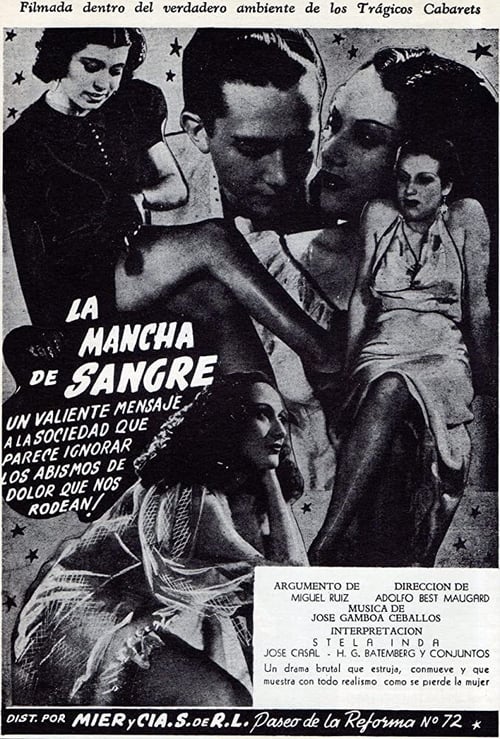
Camelia, a prostitute who works in a low-class cabaret in Mexico City (called "The Blood Stain') meets Guillermo, a young man from the country who just arrived in the city looking for a better life. She offers to take care of him until he gets set up, and the initial friendship soon turns romantic. This inevitably causes problems with Gastón, Camelia's pimp.
1948

1931

1974

1930

1932

1920

1927

1978
No reviews yet. Be the first to share your thoughts on this movie!
Use the rating form above to leave a star rating and optional review.