
Fire at Sea
2016
No user ratings available yet
Diversity score: 6.2 out of 10

2013
Not RatedDirector
Gianfranco Rosi
Runtime
93 minutes
Average Rating
No ratings yetSynopsis
After the India of Varanasi’s boatmen, the American desert of the dropouts, and the Mexico of the killers of drugtrade, Gianfranco Rosi has decided to tell the tale of a part of his own country, roaming and filming for over two years in a minivan on Rome’s giant ring road—the Grande Raccordo Anulare, or GRA—to discover the invisible worlds and possible futures harbored in this area of constant turmoil. Elusive characters and fleeting apparitions emerge from the background of the winding zone: a nobleman from the Piemonte region and his college student daughter sharing a one-room efficiency in a modern apartment building along the GRA.
Overall Score
Good
Category Breakdown
LGBTQ+ Representation
The film lacks explicit narratives centered on queer domesticity or non-cisnormative identities. There is no discernible evidence of intentional LGBTQ+ character arcs within the observational style.
Gender Representation
Women are depicted navigating precarious roles within high-density social housing and urban decay. The film avoids idealized feminine tropes but does not explicitly center a subversion of masculinity.
Racial & Ethnic Diversity
Rosi presents a multicultural landscape predominantly composed of immigrant populations and diverse ethnic groups. This avoids the homogeneous norm often found in mainstream European cinema.
Religious & Cultural Diversity
The narrative offers a profound critique of traditional Western institutions and capitalist structures. It frames the state as indifferent through its portrayal of social housing and material scarcity.
Disability Representation
There is no intentional focus on neurodivergence or visible disabilities as central identities. The depiction of hardship remains broad and socioeconomic rather than centered on disabled agency.
Strengths
Areas for Improvement
AI Analysis
Sacro GRA succeeds as a powerful ethnographic study of Rome's periphery, effectively dismantling the homogeneous norms of European cinema. Its greatest strength lies in its rich, multicultural tapestry, presenting a complex intersection of immigrant identities and diverse ethnic groups living on the margins. However, the film's observational, fly-on-the-wall approach results in a lack of specific representation for LGBTQ+ identities and neurodivergent individuals. While it captures the systemic struggle of the working class, it does not center these specific marginalized identities as primary narrative drivers. Ultimately, the film is a sophisticated deconstruction of institutional stability. It prioritizes the 'othered' subject, using the urban decay of the ring road to critique the failure of modern state structures.
2016

2022
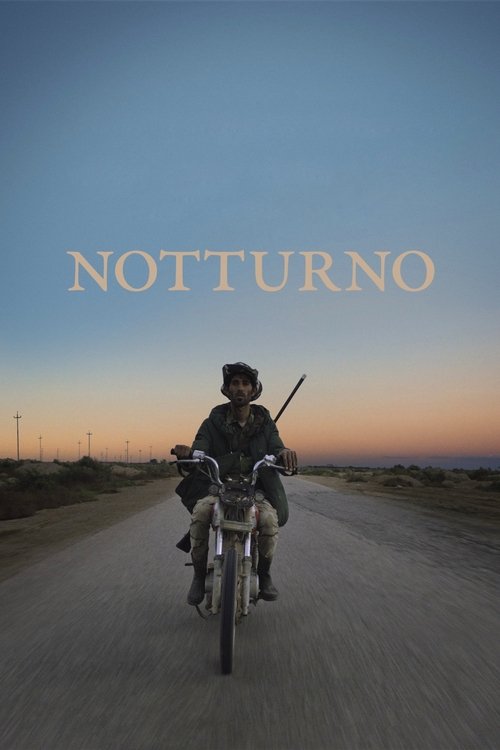
2020
2008
2007

2020

2021

2017
1990
2022

2018

2008
No reviews yet. Be the first to share your thoughts on this movie!
Use the rating form above to leave a star rating and optional review.