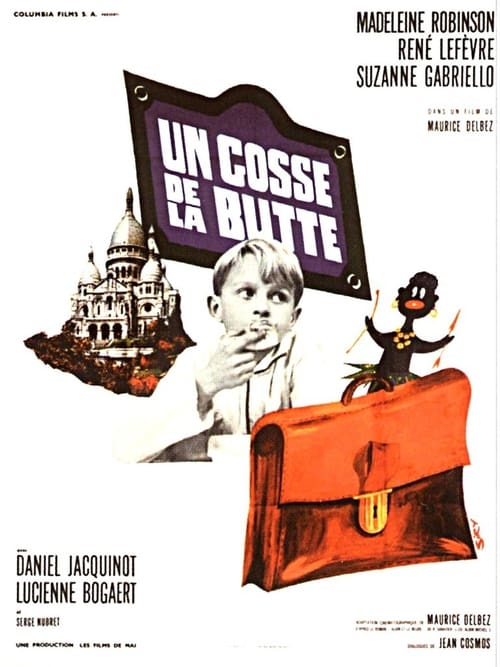
Un gosse de la butte
1964
No user ratings available yet
Diversity score: 2.3 out of 10

1925
Director
Julien Duvivier
Runtime
108 minutes
Average Rating
No ratings yetSynopsis
The suffering and rebellion of 12-year-old François Lepic, nicknamed "Carrot Top" by his mother, who hates him. Occupied with the council elections, his father appears unaware that the young boy is increasingly tempted by suicide.
Overall Score
Limited
Category Breakdown
LGBTQ+ Representation
The film contains no evidence of non-heteronormative identities or queer narratives. It focuses strictly on domestic friction within a traditional family structure.
Gender Representation
The story disrupts the nurturing mother archetype by depicting a parent who actively marginalizes her son. This subverts conventional maternal tropes through emotional suppression.
Racial & Ethnic Diversity
Reflecting the homogeneous social structures of 1925 France, the film lacks evidence of a diverse cast. It appears to focus on a singular ethnic context.
Religious & Cultural Diversity
The narrative critiques traditional Western domestic ideals by framing the family as a source of suffering. It highlights the disconnect between civic duties and emotional welfare.
Disability Representation
The protagonist's suicidal ideation suggests a focus on mental health struggles. However, it remains unclear if these psychological distresses are portrayed with true agency.
Strengths
Areas for Improvement
AI Analysis
Julien Duvivier’s 1925 drama offers a grim deconstruction of the idealized family unit. By centering on a child's emotional neglect and contemplation of self-harm, the film moves away from sanitized domesticity toward a study of alienation. The film's primary strength lies in its subversion of social archetypes, particularly regarding maternal roles. It uses the protagonist's nickname as a tool of marginalization to illustrate systemic emotional distance within the home. However, the work lacks intersectional breadth. The narrative is confined to a homogeneous social context, offering little representation of diverse racial, ethnic, or LGBTQ+ identities.
1964
1912
1929
1949
1985

2014
2009

2016

2007
1930
No reviews yet. Be the first to share your thoughts on this movie!
Use the rating form above to leave a star rating and optional review.