Tokyo Strangler
2006
No user ratings available yet
Representation score: 4.5 out of 10
Representation Score
Fair
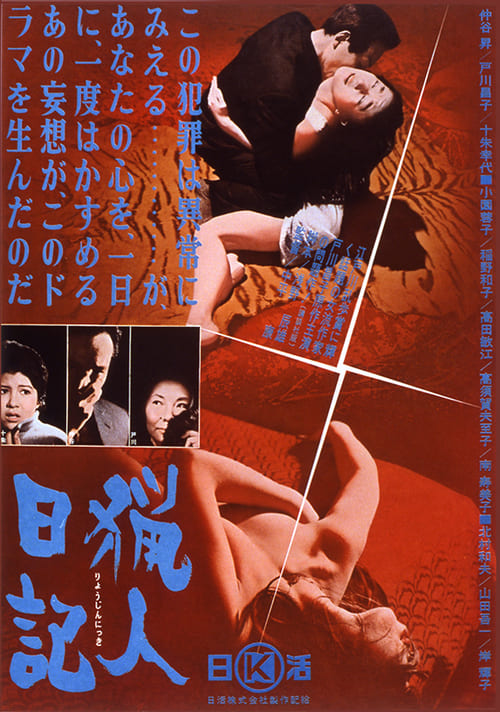
1964
Director
Kō Nakahira
Runtime
123 minutes
Average Rating
No ratings yetNew Showbiz Analysis
Kō Nakahira’s thriller examines the breakdown of traditional social norms in post-war urban Japan. It shifts away from the single moral viewpoint of the time by focusing on a protagonist driven by personal desires rather than societal obligations. The film's strength lies in its dismantling of the stable husband role and its critical view of social institutions. It uses the protagonist's dual life to highlight the instability of individuals in a capitalist society. However, the film remains confined to a narrow focus on heterosexual relationships and a homogeneous demographic. It primarily serves as a genre-driven exploration of male libido and predatory behavior.
Category Breakdown
The film focuses on heterosexual relationships and the male perspective, without including any stories about LGBTQ+ identities or characters who don't identify with their assigned gender at birth.
The story emphasizes the 'hunter' stereotype, highlighting male dominance. However, it questions traditional gender roles by showing the collapse of a conventional marriage.
The film reflects the demographics of 1964 Japan, with a predominantly homogeneous urban population. It does not depict any significant mixing of races.
The movie steers clear of traditional moral teachings by focusing on a deceitful, antisocial main character. It explores moral ambiguity and the instability of individuals in a rapidly changing urban setting.
The film does not focus on physical or neurological differences among characters.
Present on Screen
Limited or Absent
Official Synopsis
Leaving his wife in Osaka, Honda leads a double life in Tokyo – after spending the day as an elite businessman, he flirts around in the evenings. He even rents a secret apartment where he keeps record of his girl hunts in his diary, the ‘Hunter’s Diary’. One day, he finds an article in the newspaper – a murder of a young woman in his diary. A few days later, another woman from his diary is murdered. He soon finds himself in a labyrinth of fear, as women named in his diary are killed one after another...
2006

1964

1996
1978

1960
1956
1956

1960
No reviews yet. Be the first to share your thoughts on this movie!
Use the rating form above to leave a star rating and optional review.