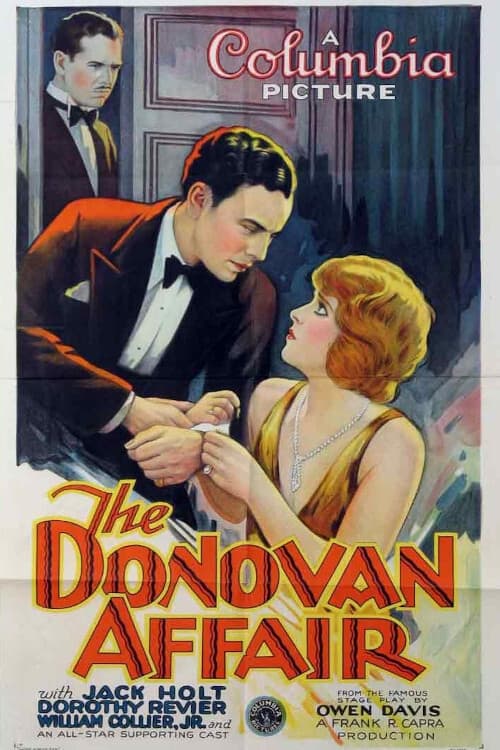
The Donovan Affair
1929
No user ratings available yet
Representation score: 0.2 out of 10

Representation Score
Minimal
1929
NRDirector
Malcolm St. Clair, Frank Tuttle
Runtime
82 minutes
Average Rating
No ratings yetNew Showbiz Analysis
This film is a typical example of early sound era cinema, reinforcing traditional social, gender, and racial hierarchies. It follows a standard genre format that upholds the status quo through detective work. While the female protagonist exhibits a degree of ability to act, the resolution of the story hinges on the male detective's intellect, reinforcing a hierarchy where male intelligence resolves social conflicts. The film does not intentionally address diversity, presenting a homogeneous, upper-class world that avoids any critique of socioeconomic structures or systemic power.
Category Breakdown
The film adheres to traditional assumptions about relationships and gender, with no indication of diverse sexual orientations or gender identities.
The movie emphasizes traditional gender roles. The main female character uses her influence to blackmail others, but her actions are seen as morally wrong and ultimately lead to her demise.
The film reflects the demographic makeup typical of early 20th-century cinema. The cast primarily consists of white, upper-class characters.
The plot centers on solving a mystery, focusing on individual guilt rather than broader societal issues. It prioritizes restoring social order without addressing systemic power structures.
There is no depiction of physical or cognitive disabilities. Characters are portrayed as typically able-bodied individuals.
Present on Screen
Limited or Absent
Official Synopsis
A beautiful showgirl, name "the Canary" is a scheming nightclub singer. Blackmailing is her game and with that she ends up dead. But who killed "the Canary". All the suspects knew and were used by her and everyone had a motive to see her dead. The only witness to the crime has also been 'rubbed out'. Only one man, the keen, fascinating, debonair detective Philo Vance, would be able to figure out who is the killer.
1929
1941
1930
1944
1933
1934
1936
1931
No reviews yet. Be the first to share your thoughts on this movie!
Use the rating form above to leave a star rating and optional review.