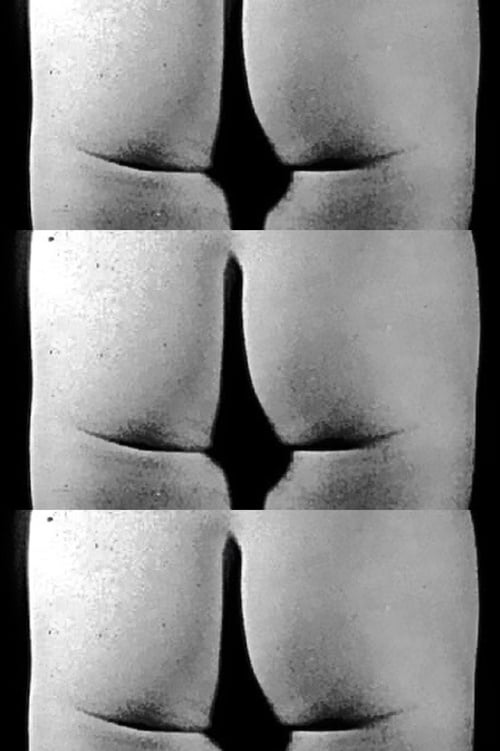
Taylor Mead's Ass
1964
No user ratings available yet
Representation score: 4.8 out of 10
Representation Score
Fair
1964
Director
Andy Warhol
Runtime
58 minutes
Average Rating
No ratings yetNew Showbiz Analysis
Couch is a seminal piece of postmodern deconstruction that prioritizes the surface over narrative cohesion. It succeeds as a systemic rejection of traditional Western storytelling hierarchies, challenging how audiences consume media. While the film lacks explicit demographic breadth or multi-layered representation, its value lies in its refusal to provide a structured story. This approach positions the work as a precursor to radical, identity-focused cinematic movements. Ultimately, the film's strength is its subversion of mainstream cinematic clichés, even as it remains limited by the homogeneous social circles of the 1960s avant-garde scene.
Category Breakdown
The film captures a landscape that implicitly critiques the assumption that everyone is straight or cisgender through the depiction of intimate acts. However, the minimalist, static nature of the long take prevents specific LGBTQ+ identities from being explicitly defined.
Warhol disrupts traditional gendered performance by stripping away commercial clichés of femininity and masculinity. The focus on mundane stillness avoids reinforcing patriarchal hierarchies, though the lack of interaction limits formal subversion.
The work reflects a relatively homogeneous social circle typical of the 1960s New York avant-garde. There is no evidence of significant racial blending or intentional diverse casting to disrupt social constraints.
The film functions as a profound critique of Western teleological narrative by rejecting plot and climax. It rejects the capitalist demand for productive content, prioritizing subjective experience and postmodernist values.
The film provides no evidence regarding the portrayal of physical or neurodivergent identities. The focus remains strictly on an observational study of a single subject.
Present on Screen
Limited or Absent
Official Synopsis
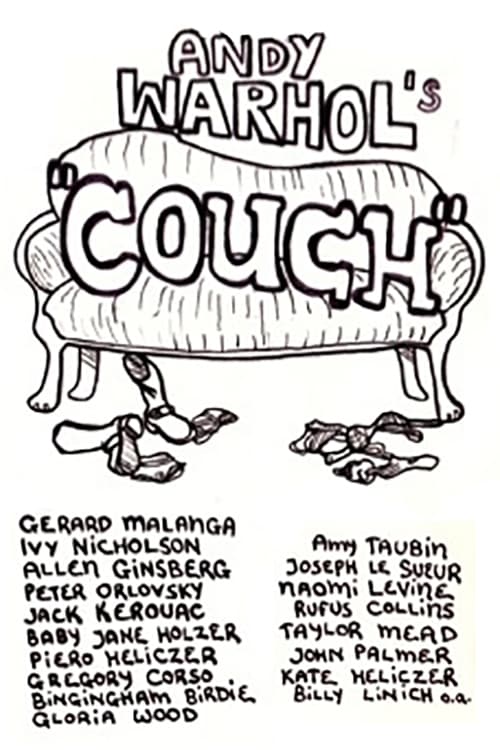
The couch at Andy Warhol's Factory was as famous in its own right as any of his Superstars. In Couch, visitors to the Factory were invited to "perform" on camera, seated on the old couch. Their many acts-both lascivious and mundane-are documented in a film that has come to be regarded as one of the most notorious of Warhol's early works. Across the course of the film we encounter such figures as poets Allen Ginsberg and Gregory Corso, the writer Jack Kerouac, and perennial New York figure Taylor Mead.
1964

1965
![Movie poster for Screen Test [ST155]: Dennis Hopper](https://image.tmdb.org/t/p/w500/gd6kmv76eK82k96iMRjbGfZRsVr.jpg)
1964
1966
1990
1978
1967
1965
No reviews yet. Be the first to share your thoughts on this movie!
Use the rating form above to leave a star rating and optional review.