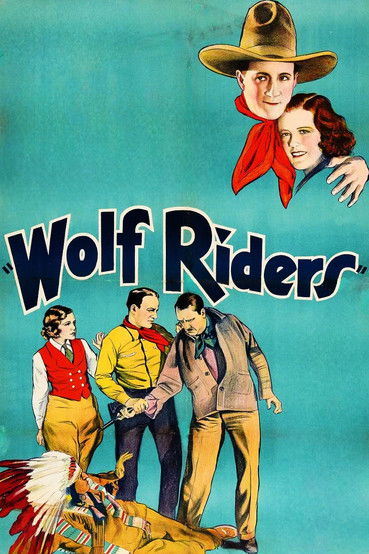
Wolf Riders
1935
No user ratings available yet
Representation score: 0.5 out of 10
Representation Score
Minimal
1934
APPROVEDDirector
Harry S. Webb
Runtime
59 minutes
Average Rating
No ratings yetNew Showbiz Analysis
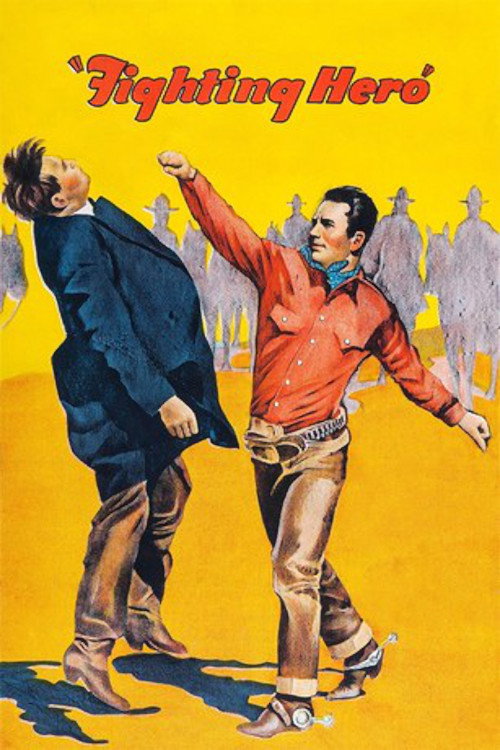
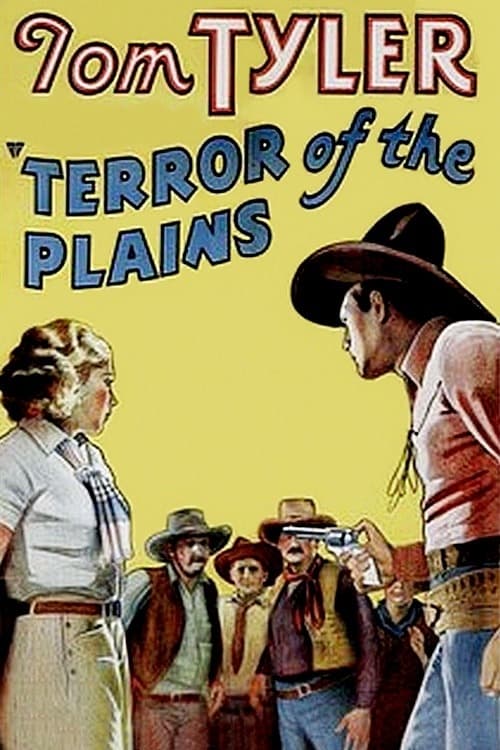
Fighting Hero opens with the standard 1934 B-Western template: a clean-cut, athletic white man standing against a chaotic, unjust crowd. Tom Tyler’s Tom Hall is the visual definition of competence, his whiteness unmarked and his morality absolute. The film’s argument is simple: the community’s impulse toward lynching is a temporary error, corrected by the hero’s superior judgment and physical prowess. Conchita Alvarez, the Mexican woman accused of murder, is the catalyst for this correction. She is not a subject with her own voice but a prop that validates the hero’s righteousness. The camera loves Tyler’s determined face and muscular frame, treating his intervention as a natural, even holy, act. The sold meaning is that white male virtue is the necessary antidote to communal prejudice. The contradiction is thin: the film critiques the mob’s violence but upholds the very hierarchy that made the mob’s fear plausible. The ending rewards Tyler with moral clarity and likely romantic union with Alvarez, who is assimilated into his world as a prize. The last image settles on the hero’s victory, affirming that the law and the white male protector are one. It is a period piece that reinforces traditional hierarchies without challenging them, offering a comfortable, unexamined vision of justice.
Category Breakdown
No same-sex intimacy or non-heteronormative identities appear on screen. The narrative is strictly heteronormative, centering a romantic pairing between the white male lead and the female lead.
Tom Hall functions as the sole agent of competence and moral authority. Conchita Alvarez serves as the passive object of rescue, with her agency restricted to being saved rather than driving the plot.
Conchita Alvarez is the only non-white character, coded as Mexican through her surname and the lynching premise. She exists primarily as a victim requiring white male protection, lacking cultural depth or power.
The film upholds the Western legal and social hierarchy, where the white hero’s intervention corrects a community error. The justice system is treated as ultimately sound, aligning seamlessly with the hero’s physical virtue.
No characters are depicted with physical, sensory, or cognitive impairments. The narrative relies on able-bodied physicality, particularly the hero’s athletic competence, without addressing disability as a social or personal experience.
Present on Screen
Limited or Absent
Official Synopsis
Tyler abducts a young Mexican girl to save her from a lynching when she is accused of the murder of a VIP whom she killed in self defense.
1935
1940
1930
1960
1930
1971
1934
1933
No reviews yet. Be the first to share your thoughts on this movie!
Use the rating form above to leave a star rating and optional review.