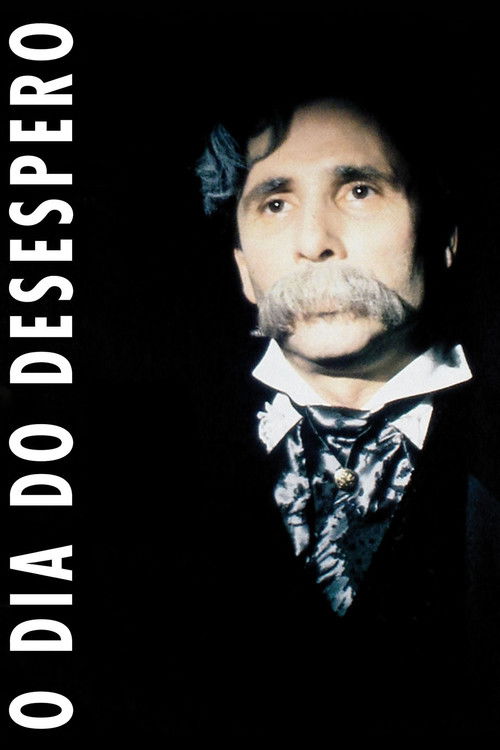
Day of Despair
1992
No user ratings available yet
Representation score: 4.5 out of 10
Representation Score
Good
1998
Director
Manoel de Oliveira
Runtime
110 minutes
Average Rating
No ratings yetNew Showbiz Analysis
Manoel de Oliveira’s anthology is a formalist, literary meditation on mortality and memory. It prioritizes philosophical depth and the internal landscapes of its characters over demographic variety. The film succeeds in providing nuanced psychological depth, particularly regarding gendered experiences and moral ambiguity. However, its heavy reliance on localized Portuguese history and period-specific realism limits its racial and multi-layered breadth. Ultimately, the work functions as a study of the human condition through a specific cultural lens, making it a deeply contemplative but demographically narrow experience.
Category Breakdown
The film does not include explicit LGBTQ+ identities or stories that challenge the assumption that everyone is straight or cisgender. It focuses on psychological tension and existential themes rather than queer-coded subtext or disrupting straight-centered structures.
The film centers on the internal emotional lives of its characters, disrupting traditional hierarchies. Female protagonists have significant psychological depth and play a crucial role in driving the story.
The cast and settings are predominantly homogeneous, reflecting Portuguese literary traditions. It functions as a study of national identity rather than showcasing diverse ethnic backgrounds.
The film explores human ethics through moral relativism and existential inquiry. Religious influence is shown as a source of psychological complexity rather than an absolute moral authority.
Themes of cognitive decline and senility appear in 'The Immortals.' These elements serve as existential metaphors for mortality rather than specific explorations of lived disability.
Present on Screen
Limited or Absent
Official Synopsis
An anthology film drama featuring a poetic mirror structure based on existential identity. In "The Immortals," adapted from a Helder Prista Monteiro play, two famous doctors, an 80-year-old father, and his 60-year-old son, contemplate senility and death. "Suzy," from an Antonio Patricio story, is set in the '30s when a young courtesan dies on the operating table. "Mother of the River" is from an Agustina Bessa-Luis fable about eternal life.
1992
1976
1987

2008
1986
1983
1997
1991
No reviews yet. Be the first to share your thoughts on this movie!
Use the rating form above to leave a star rating and optional review.