
Why We Fight: The Battle of Russia
1943
No user ratings available yet
Representation score: 4.1 out of 10
Representation Score
Minimal
1943
PGDirector
Frank Capra, Anthony Veiller
Runtime
53 minutes
Average Rating
No ratings yetNew Showbiz Analysis
As a 1943 propaganda tool, the film prioritizes national cohesion and the mobilization of the Allied war effort. It uses archival footage to create a unified, traditionalist identity that reinforces the social hierarchies of the mid-20th century. The narrative structure emphasizes masculine leadership and the defense of Western democratic institutions. This focus leads to a lack of multi-layered complexity, presenting a singular, homogeneous vision of the British people.
Category Breakdown
The film does not include any LGBTQ+ individuals. It focuses solely on traditional 1940s social structures without addressing queer identities.
Men in the RAF and military leadership have primary roles. Women in the WAAF are visible but their roles are presented as secondary and supportive to the male-dominated military.
The documentary reflects the historical homogeneity of the era's British population. It portrays a predominantly Anglo-Saxon demographic as the norm, excluding diverse ethnic perspectives.
The film promotes patriotism and state-led defense to strengthen national identity against fascism. It serves as an instrument of Western institutional preservation.
There is no representation of physical or neurodivergent disabilities. The film focuses on idealized, able-bodied soldiers and resilient civilians.
Present on Screen
Limited or Absent
Official Synopsis
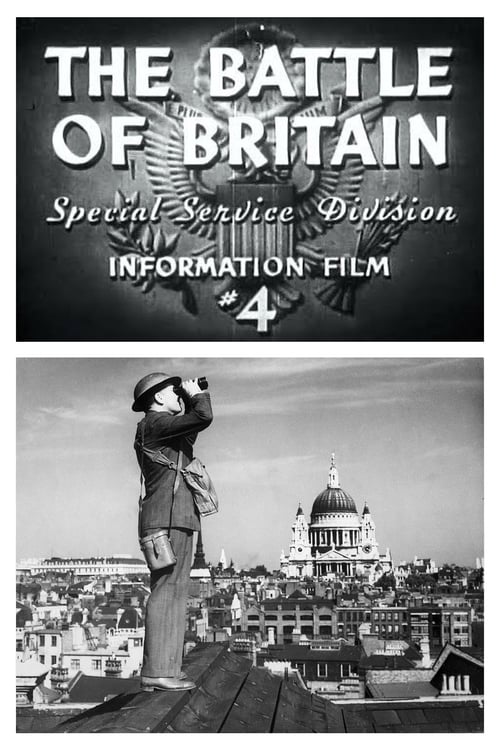
The fourth of Frank Capra's Why We Fight series of seven propaganda films, which made the case for fighting and winning the Second World War. It was released in 1943 and concentrated on the German bombardment of the United Kingdom in anticipation of Operation Sea Lion, the planned German invasion.
1943

1943

1945
1942
1942

1945

1944

1939
No reviews yet. Be the first to share your thoughts on this movie!
Use the rating form above to leave a star rating and optional review.