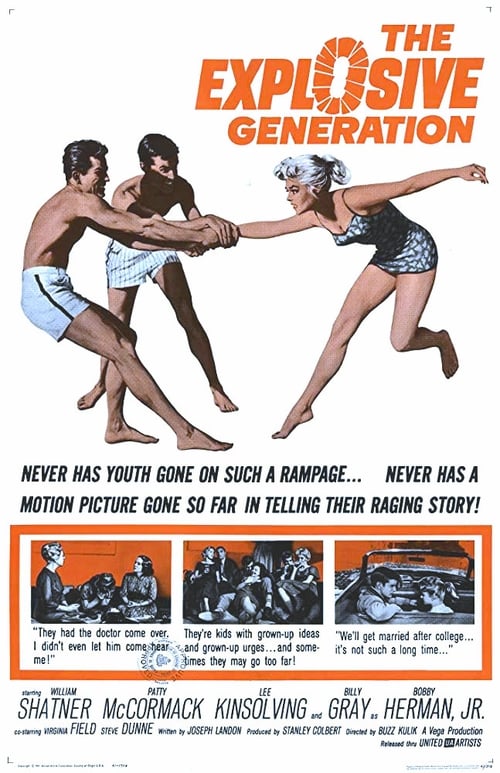
The Explosive Generation
1961
No user ratings available yet
Representation score: 2.9 out of 10

Representation Score
Limited
1960
ApprovedDirector
Albert Zugsmith
Runtime
91 minutes
Average Rating
No ratings yetNew Showbiz Analysis
College Confidential operates as a period piece addressing the social taboos of 1960. It employs a sociological perspective to examine the limits of traditional morality and institutional authority. Despite a lack of depth regarding race and LGBTQ+ identities, the film finds progressive value in its willingness to question social norms. The tension between individual freedoms and established social structures adds layers of intellectual complexity. Overall, the film is a product of its time, balancing traditional patriarchal structures with a critical interest in the intricacies of human behavior and sexual politics.
Category Breakdown
The film does not explicitly include LGBTQ+ characters or explore non-cisgender identities. The plot touches on sexual politics but does not clearly go beyond traditional heterosexual norms.
The story focuses on a male professor dealing with a social crisis, reflecting older patriarchal structures. However, Betty Ducayne contributes significantly as an investigative reporter, driving the plot forward.
The production seems to follow the homogeneous casting practices typical of the 1960s. There is no indication of a diverse cast, suggesting a predominantly white academic environment.
The narrative questions traditional moralism by focusing on a sociological study of sexual behaviors. This approach challenges rigid institutional norms and the concept of the 'good citizen.'
The film does not feature any characters with visible or invisible disabilities.
Present on Screen
Limited or Absent
Official Synopsis
Sociology professor Steve MacInter is conducting a survey at Collins College about the mores and lifestyles of the young people. Some of the good citizens begin to find exception to his sociological survey when they find out it includes questions about sex. Reporter Betty Ducayne receives an anonymous tip that the good professor is engaging in corruption of youth and when Steve's past comes up to haunt him, all heck breaks loose.
1961
1951
1952

1973
1974
1969
1967
1969
No reviews yet. Be the first to share your thoughts on this movie!
Use the rating form above to leave a star rating and optional review.