
Don't Blink - Robert Frank
2015
No user ratings available yet
Representation score: 6.2 out of 10
Representation Score
Limited
2003
Not RatedDirector
Heinz Bütler
Runtime
72 minutes
Average Rating
No ratings yetNew Showbiz Analysis
This documentary presents a respectful biography of a renowned photographer. Its approach to representation is shaped by the archival nature of the subject rather than by intentional social commentary. While the film showcases global ethnic diversity through Cartier-Bresson's travels, it does not provide a narrative structure to challenge established social hierarchies. The perspective is grounded in the historical context of a male-dominated era of photojournalism. Ultimately, the film serves as a historical record of an individual's creative journey, offering insights into diverse global landscapes but avoiding engagement with progressive themes.
Category Breakdown
The film does not include any narratives or direct references to LGBTQ+ identities. The focus remains on the professional and philosophical views of Cartier-Bresson and his peers.
The narrative is predominantly focused on the male perspective, reflecting the historical context of mid-20th-century photojournalism. While Isabelle Huppert plays a role, the central focus is on Cartier-Bresson.
Diversity is shown incidentally through Cartier-Bresson’s travels, including visits to Mexico and his interactions with Gandhi. The archival material provides glimpses into various cultures without a modern critique of the Western viewpoint.
The film adheres to a traditional biographical format, emphasizing artistic legacy over critical analysis of Western institutions. It avoids direct critiques of capitalism or religion.
There are no specific representations of visible or invisible disabilities used as central narrative elements or plot devices in the film.
Present on Screen
Limited or Absent
Official Synopsis
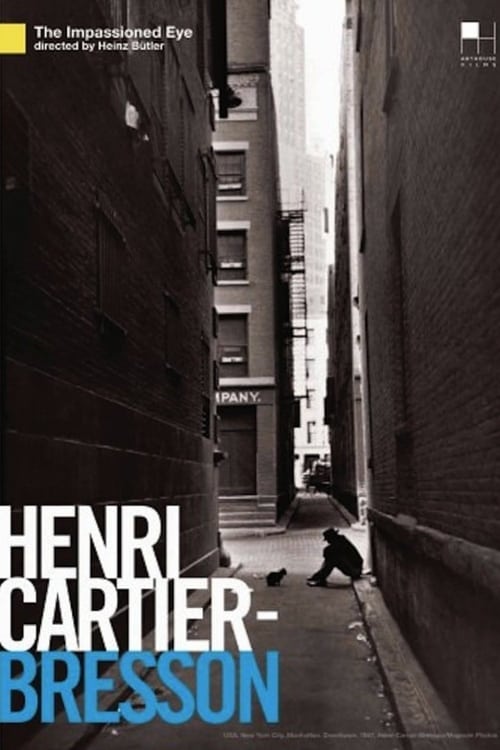
Heinz Bütler interviews Henri Cartier-Bresson (1908-2004) late in life. Cartier-Bresson pulls out photographs, comments briefly, and holds them up to Bütler's camera. A few others share observations, including Isabelle Huppert, Arthur Miller, and Josef Koudelka. Cartier-Bresson talks about his travels, including Mexico in the 1930s, imprisonment during World War II, being with Gandhi moments before his assassination, and returning to sketching late in life. He shows us examples. He talks about becoming and being a photographer, about composition, and about some of his secrets to capture the moment.
2015
1961
2012

2008

2003

2014
2017
2014
No reviews yet. Be the first to share your thoughts on this movie!
Use the rating form above to leave a star rating and optional review.