
That Man's Here Again
1937
No user ratings available yet
Representation score: 0.9 out of 10
Representation Score
Minimal
1930
PassedDirector
Russell Mack
Runtime
84 minutes
Average Rating
No ratings yetNew Showbiz Analysis
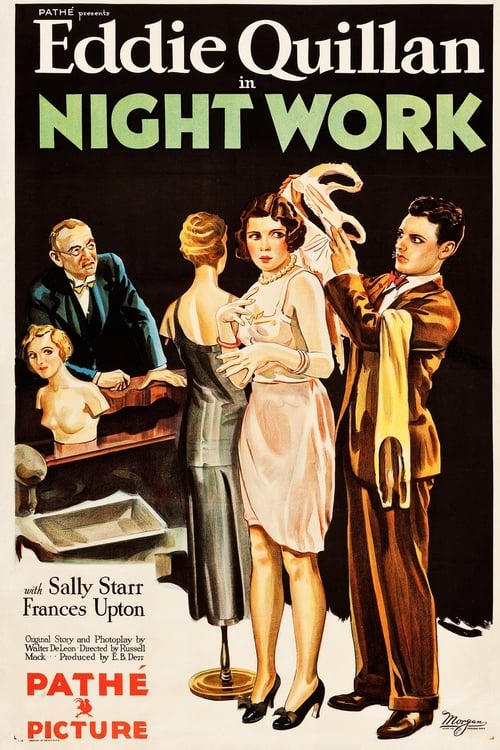
Night Work is a conventional early sound-era comedy that relies heavily on established social hierarchies and traditional clichés. The narrative centers on a male protagonist's struggle for professional stability and his ability to provide, reinforcing standard masculine roles of the period. While the film touches on class through the lens of a department store worker, it lacks depth in exploring multiple aspects of identity. The story prioritizes individual perseverance and social integration over any systemic critique of the era's demographic or economic norms. Ultimately, the film reflects the homogeneous social standards of 1930, offering little in the way of diverse representation or subversion.
Category Breakdown
The film does not include any LGBTQ+ identities or narratives that question the assumption that everyone is straight or cisgender. There are no characters who challenge traditional gender roles or sexual norms.
Mary is shown as a professional nurse who supports the male lead. However, she is primarily positioned as a stabilizing influence for him, reinforcing traditional gender roles.
The film depicts a homogeneous social environment with no indication of a multi-ethnic cast or the use of non-white characters to drive the plot.
Themes of class struggle are explored through the protagonist's position in a department store. Traditional values are emphasized through the adoption of an orphan, reflecting the social norms of the time.
There are no characters with visible or invisible disabilities featured in the film.
Present on Screen
Limited or Absent
Official Synopsis
Willie, as an assistant window-dresser, is the lowest man on the totem pole at a department store. To add insult-to-injury Willie is also the store's designated 'Fired Man."; when a disgruntled customer demands that somebody-must-be-fired, Willie is summoned and summarily fired, only to be rehired when the now-satisfied customer has departed. Willie inadvertently adopts a four-year-old orphan at a cost of ten-dollars a week, and things go from bad to worse since Willie doesn't make ten-dollars a week. But, with the help of Mary, a beautiful young nurse, Willie manages to turn some corners and improve his lot in life, albeit with some skids along the way.
1937

1928

1941

1936

1935

1936

1932

1924
No reviews yet. Be the first to share your thoughts on this movie!
Use the rating form above to leave a star rating and optional review.