
Meet Mr. Daddy
2007
No user ratings available yet
Representation score: 5.2 out of 10
Representation Score
Limited
2007
Director
Kim Jin-sung
Runtime
104 minutes
Average Rating
No ratings yetNew Showbiz Analysis
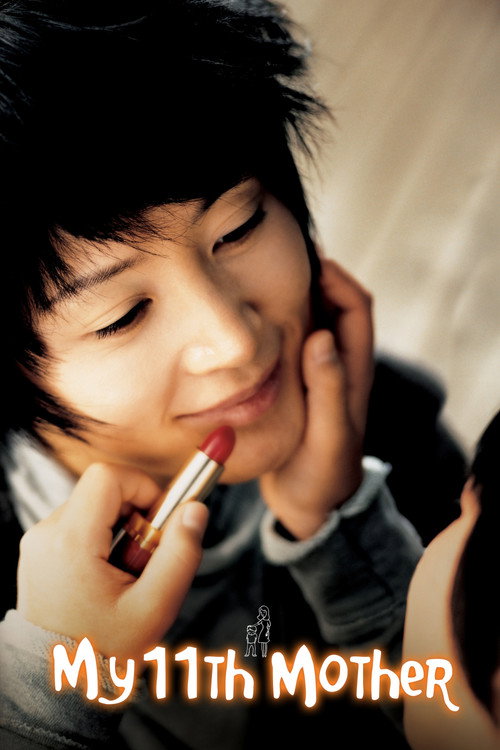
My 11th Mother is a localized South Korean drama that deconstructs the idealized family unit. By focusing on a cynical child and a ne'er-do-well father, the film explores a more fractured reality. However, the film lacks broader diversity. It operates within a culturally homogeneous setting and does not feature explicit LGBTQ+ representation or diverse racial casting. Female characters, while central to the plot, are primarily defined by their connections to the male protagonist and the child.
Category Breakdown
The film does not include explicit LGBTQ+ characters or non-straight relationships. The story revolves around a father's romantic pursuits within traditional heterosexual norms.
Female characters are portrayed as temporary maternal figures defined by their relationships to the father and child. While they challenge the traditional mother archetype, their individual roles and influence remain unclear.
As a South Korean production, the film operates within a culturally homogeneous framework. It reflects its specific cultural context without exploring multi-ethnic diversity.
The story disrupts the stable, virtuous nuclear family cliché by showing a dysfunctional household. It critiques traditional domestic stability through a series of changing maternal figures.
The film does not mention characters dealing with physical, neurodivergent, or mental health conditions.
Present on Screen
Limited or Absent
Official Synopsis
A cynical young boy gets to know the latest girlfriend of his ne'er-do-well father and begins to hope that this new relationship actually sticks.
2007
2020
2000
2002

2012

2018
2007
1997
No reviews yet. Be the first to share your thoughts on this movie!
Use the rating form above to leave a star rating and optional review.