
All About Ah-Long
1989
No user ratings available yet
Representation score: 3.1 out of 10
Representation Score
Fair
2000
Director
Wang Shuo
Runtime
96 minutes
Average Rating
No ratings yetNew Showbiz Analysis
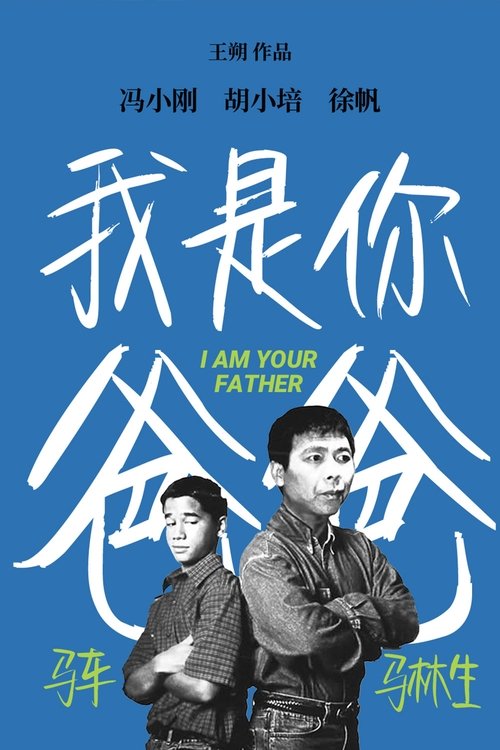
Wang Shuo’s *Father* is a gritty domestic drama that deconstructs the archetype of the stable patriarch. Instead of presenting an idealized family, the film explores the tension between individual autonomy and traditional structures through a lens of social realism. The film effectively critiques traditional masculinity by portraying the male protagonist as emotionally unstable and inadequate. This subversion of the 'strong provider' role offers a sophisticated look at domestic dysfunction. However, the film lacks depth in terms of the way different parts of someone's identity overlap. It remains confined to a straight-centered and ethnically homogeneous framework, missing opportunities to engage with broader spectrums of identity beyond the specific Chinese class dynamics presented.
Category Breakdown
The film adheres to a strictly heterosexual framework, focusing on a widowed father and a potential female partner without acknowledging any queer identities or subtext.
The narrative challenges the 'strong provider' cliché by depicting the male protagonist as emotionally unstable and inadequate, providing a nuanced critique of traditional masculinity and patriarchal stability.
The cast is ethnically uniform, reflecting a specific Chinese social context. The film emphasizes class dynamics and cultural grounding without exploring multi-ethnic or racial diversity.
The story challenges Confucian hierarchies by giving the child significant control to disrupt his father's authority, framing the nuclear family as a site of conflict rather than moral stability.
There are no visible or invisible disabilities portrayed as central to the characters or the narrative.
Present on Screen
Limited or Absent
Official Synopsis
Father documents the tumultuous relationship between a widowed father, Ma Lisheng, and his school-age son, Ma Che. Though he works as a low-level party functionary during the day, he finds his greatest challenges in the raising of a son on his own. Alternating between trying to bond with his son (even getting drunk with him), and verbally accosting him, Ma is at a loss. One day the son decides that the best way for his father to stop harassing him, will be to find him a new wife, which he finds in the form of the mother of a school friend, Qing Huaiyuan.
1989
1997
2005
2002
2007

1989
2003
2005
No reviews yet. Be the first to share your thoughts on this movie!
Use the rating form above to leave a star rating and optional review.