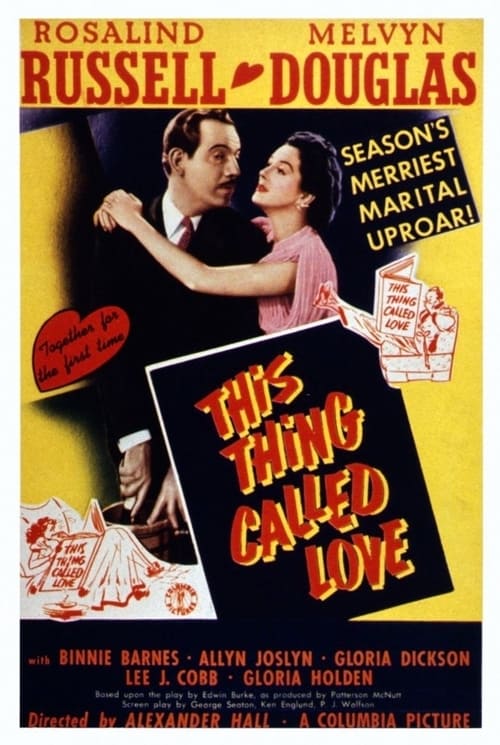
This Thing Called Love
1940
No user ratings available yet
Representation score: 1.6 out of 10

Representation Score
Minimal
1957
Director
Maurice Elvey
Runtime
78 minutes
Average Rating
No ratings yetNew Showbiz Analysis
Second Fiddle serves as a window into the systemic barriers faced by high-achieving women during the mid-century era. The narrative centers on the friction between professional merit and rigid social structures, specifically the 'career vs. marriage' cliché. While the film offers a critique of gendered professional dynamics, it remains rooted in the traditional domestic frameworks of its time. The lack of diverse representation and the focus on a conventional heterosexual pairing limit its broader social scope. Ultimately, the film reflects the homogeneous social landscape of 1957, prioritizing mid-century social hierarchies over diverse representation.
Category Breakdown
The film follows a traditional romantic structure centered around a heterosexual couple. It does not include any non-assuming gender matches what was assigned at birth identities or critiques of the assumption that everyone is straight or cisgender.
Deborah is portrayed as a brilliant TV executive, yet her career is threatened by systemic rules against married women. This highlights the precarious nature of professional opportunities for women in the 1950s.
The film reflects the homogeneous social landscape typical of 1957 British cinema. No non-white or non-Anglo-Saxon representation is mentioned in the character descriptions.
The story explores the tension between individual ambition and mid-century institutional expectations. The marriage rule of the ability to act critiques how corporate structures enforce traditional social norms.
There is no information available regarding the portrayal of physical or neurodivergent characters.
Present on Screen
Limited or Absent
Official Synopsis
Deborah and Charles, young executives at the thriving Pontifex Advertising Agency, are very much in love. Deborah is recognised by her employers as the most brilliant TV executive in the country, while Charles is regarded as 'thoroughly reliable'. But there is one hard-and-fast rule at the agency: the board of directors will not allow any married women on their staff; as soon as a girl marries, she must resign!
1940

1946
1933
1949
1948

1942
1963
1960
No reviews yet. Be the first to share your thoughts on this movie!
Use the rating form above to leave a star rating and optional review.