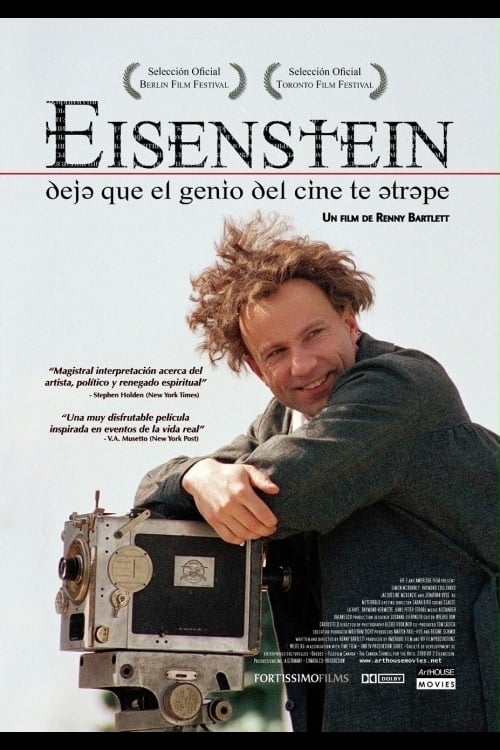
Eisenstein
2000
No user ratings available yet
Representation score: 2.6 out of 10

Representation Score
Fair
2014
Director
Mikhail Segal
Runtime
95 minutes
Average Rating
No ratings yetNew Showbiz Analysis
The film serves as a surreal character study that emphasizes psychological depth over broad demographic representation. It employs a non-linear structure to explore how an individual interacts with large historical and political forces such as the KGB and legendary cultural figures. While the film excels at deconstructing traditional historical legacies and moving away from state-sanctioned hero narratives, it remains culturally specific. Its focus on Russian icons creates a narrow ethnic lens, limiting broader characters who reflect more than one aspect of diversity. Ultimately, the work prioritizes narrative complexity over traditional diversity markers, offering a highly personalized perspective on history despite a lack of overt representation of underrepresented identities.
Category Breakdown
The film does not explicitly represent LGBTQ+ identities or romantic pairings. While it explores deep personal connections, there is no clear depiction of non-traditional gender identities.
The story focuses on a male protagonist's journey of self-discovery. Although love transforms his life, the film does not clearly challenge traditional gender roles or power structures.
The narrative is set in a specific Russian and Soviet cultural context, emphasizing iconic national figures. This focus results in a relatively homogeneous ethnic setting.
The film provides a nuanced critique of systemic history and state institutions. It uses cultural icons to deconstruct monolithic hero narratives in favor of individual experiences.
The provided narrative does not mention characters dealing with physical, neurodivergent, or mental health conditions.
Present on Screen
Limited or Absent
Official Synopsis
The film is a journey through the amazing life of Alekseyev. He drank tea with Tarkovsky, got into the KGB because of Gagarin, competed with Kalashnikov and Vysotsky. One day, he will learn more about himself than he knew and could have imagined: about his talent, about the mark that he left in the destinies of other people. You can live your life again if someone loves you.
2000

1997

2011
1986
2007

2009

2013
2012
No reviews yet. Be the first to share your thoughts on this movie!
Use the rating form above to leave a star rating and optional review.