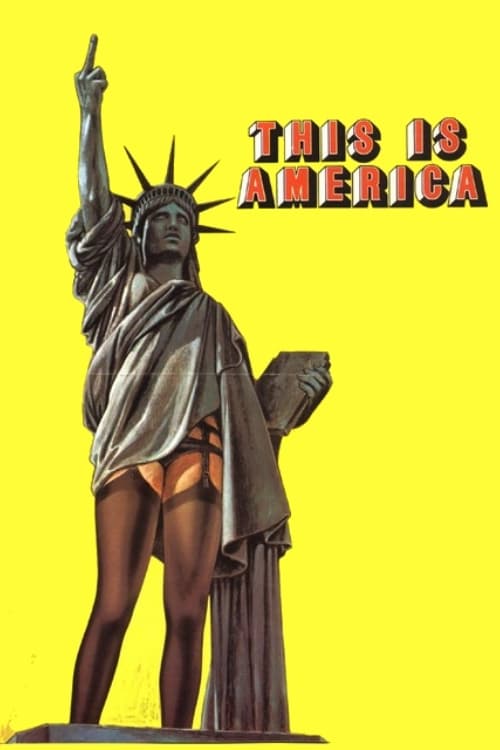
This Is America
1977
No user ratings available yet
Representation score: 3.3 out of 10
Representation Score
Fair
1980
Director
Romano Vanderbes
Runtime
102 minutes
Average Rating
No ratings yetNew Showbiz Analysis
This documentary functions as a postmodern critique of American exceptionalism. It prioritizes the documentation of counter-cultural movements and the deconstruction of mainstream social cohesion over traditional storytelling. The film's strength lies in its cultural disruption, using subversive imagery to challenge religious and patriotic institutions. It successfully moves away from the homogeneous depictions common in 1980s media by centering on the fringes of society. However, the work lacks explicit focus on racial and ethnic the way different parts of someone's identity overlap and specific LGBTQ+ narratives. While it portrays non-conformist behaviors, it does not provide deep, identity-driven character development for these groups.
Category Breakdown
The film explores underground subcultures and orgies, suggesting a departure from assumptions that everyone is straight or cisgender. However, it lacks specific character arcs focused on LGBTQ+ identity or significant roles.
Gender hierarchies are disrupted through unconventional lifestyles. The inclusion of martial arts nuns provides a subversion of traditional female archetypes by emphasizing physical empowerment.
The documentary focuses on underrepresented subcultures like punks and underground vagrants. While it avoids middle-class homogeneity, specific racial or layered diversity is not explicitly detailed.
The work excels at critiquing Western institutions. By depicting a drug-abusing church and subversive patriotic performances, it actively deconstructs traditional religious and nationalist structures.
There is no clear evidence regarding disability representation. Eccentric figures like Captain Sticky appear to be social outliers rather than specific studies of disability.
Present on Screen
Limited or Absent
Official Synopsis
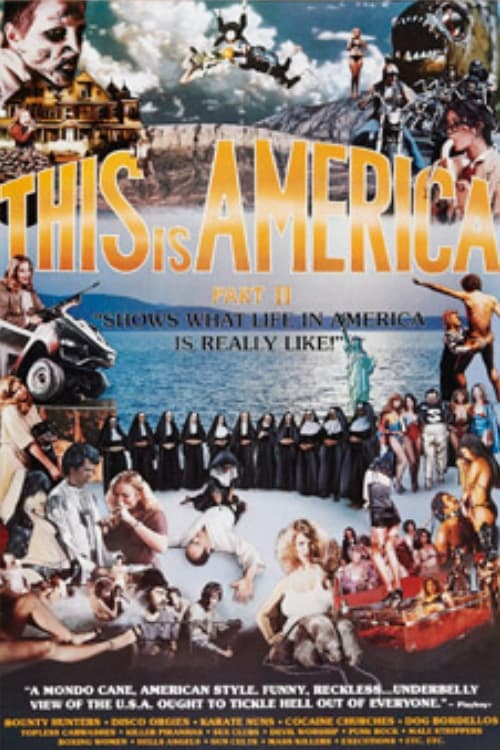
The sequel to This is America, aka Jabberwalk. This film goes inside the real America circa 1980 - a world of punks, orgies and worm-eating hicks! Romano Vanderbes back on the film making side and Norman Rose back on narrating duty for the second of the This Is America trilogy. Things kick off slightly louder this time with a performance by The Dictators doing a version of America the Beautiful while the titles role, then right into piece about punk star Jello Biafra of the Dead Kennedy's running for mayor of San Francisco. Then back into a more This Is America feeling segment about a crazy fat bloke called Captain Sticky. Among some of the other more interesting segments we get a look at underground vagrants, a piranha attack, martial arts nuns, a family of worm eaters, a drug abusing church and ends with a death row electrocution.
1977
1981
1991
1976
1988
1981
1996
1969
No reviews yet. Be the first to share your thoughts on this movie!
Use the rating form above to leave a star rating and optional review.