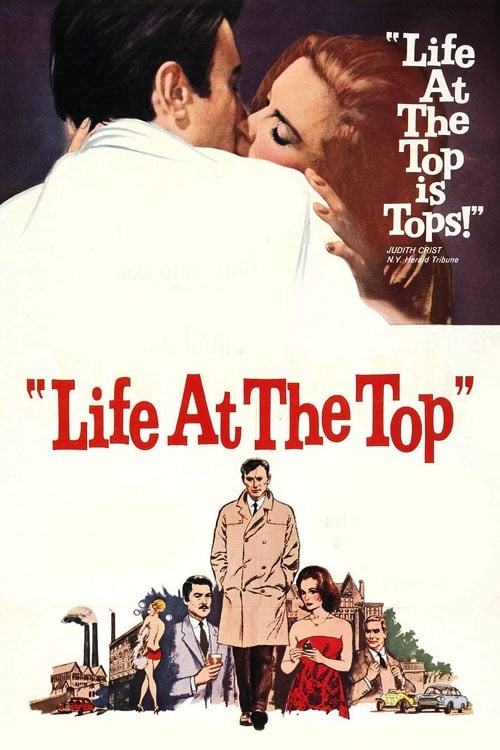
Life at the Top
1965
No user ratings available yet
Diversity score: 3.2 out of 10

1990
Director
Ray Argall
Runtime
87 minutes
Average Rating
No ratings yetSynopsis
A man and his wife are partners in a small business, a service station, that is struggling to survive financially. They are visited by his brother, a divorced middle-aged man, who has taken a break from his stressful career in a big business corporation.
Overall Score
Limited
Category Breakdown
LGBTQ+ Representation
The film operates within a conventional heteronormative paradigm. It lacks LGBTQ+ characters, queer subtext, or any critique of traditional marital frameworks.
Gender Representation
Gender roles reflect 1950s Australian expectations, reinforcing traditional domestic hierarchies. The narrative focuses on marital complexities without subverting established gendered power structures.
Racial & Ethnic Diversity
The setting and casting depict a homogeneous demographic consistent with mid-century rural Australia. There is no inclusion of non-Anglo-Saxon perspectives or intersectional identities.
Religious & Cultural Diversity
The story emphasizes traditionalist values and the family unit as a foundational institution. It avoids ideological or structural critiques, focusing instead on personal economic struggles.
Disability Representation
There are no prominent depictions of visible or invisible disabilities. Characters are presented through the standard physical health norms of the period.
Strengths
Areas for Improvement
AI Analysis
Return Home is a period drama that prioritizes the exploration of mid-century social structures and domestic stability. The narrative focuses on the interpersonal friction within a traditional family unit set in rural Australia. The film maintains the social and demographic status quo of its era. It offers a singular study of traditional family dynamics rather than introducing diverse perspectives or disrupting conventional hierarchies. Because the story adheres strictly to the historical context of the 1950s, it lacks intersectional complexity and fails to engage with a wide range of identities.
1965
1984

1963

1998
1953

1984
1973

2019

1970
1992

1973

1965
No reviews yet. Be the first to share your thoughts on this movie!
Use the rating form above to leave a star rating and optional review.