
Simple-Minded
1942
No user ratings available yet
Representation score: 2.0 out of 10
Representation Score
Limited
1939
Director
Serge de Poligny
Runtime
85 minutes
Average Rating
No ratings yetNew Showbiz Analysis
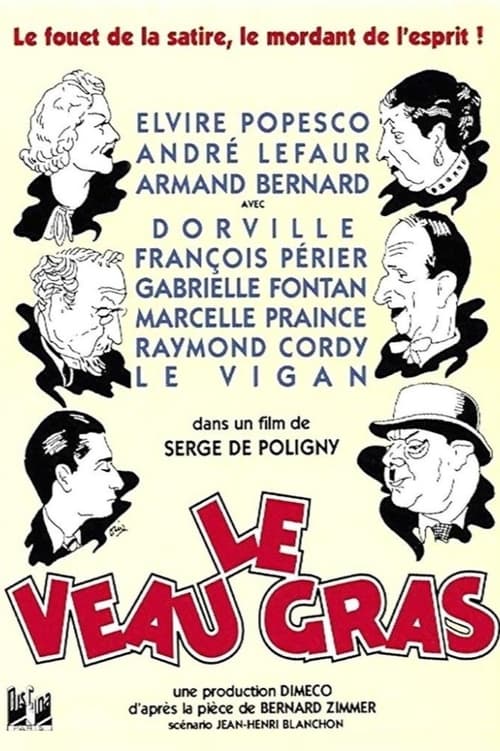
The Fatted Calf is a period-specific comedy that adheres to the social hierarchies of 1939 France. It relies on traditional comedic archetypes and contrasts between steady and opportunistic characters. Women provide financial support but are not portrayed as independent actors. The film reflects a homogeneous social landscape. It does not attempt to challenge contemporary norms or identity-based power structures. Ultimately, the work stays within the conventional social and narrative frameworks of its time, lacking the intentionality needed to move beyond these frameworks.
Category Breakdown
The story focuses on heterosexual relationships and family dynamics. There are no representations of non-straight identities or critiques of the assumption that everyone is straight or cisgender.
Men play key roles in driving the main conflicts. Wealthy women provide the financial backing necessary for success, but they are not portrayed as independent agents.
The film depicts a village setting typical of 1939 French cinema. There is no indication of a multi-ethnic cast or the challenging of societal norms.
The story examines social mobility and the tension between hard work and opportunism. It uses irony to critique class-based success through a traditional comedic lens.
The film does not include any depiction of physical or neurodivergent disabilities.
Present on Screen
Limited or Absent
Official Synopsis
Jules Vachon, a pharmacist, has two sons, Gabriel, a steady-minded young man dedicated to his job in the pharmacy, and Gaston, a good for nothing whose only talent is to seduce rich women and take money from their pockets. But it is Gaston who is hailed as a great man when he returns to his native village thanks to his deep pockets.
1942

1934

1949

1938
1947

1978
1943
1935
No reviews yet. Be the first to share your thoughts on this movie!
Use the rating form above to leave a star rating and optional review.