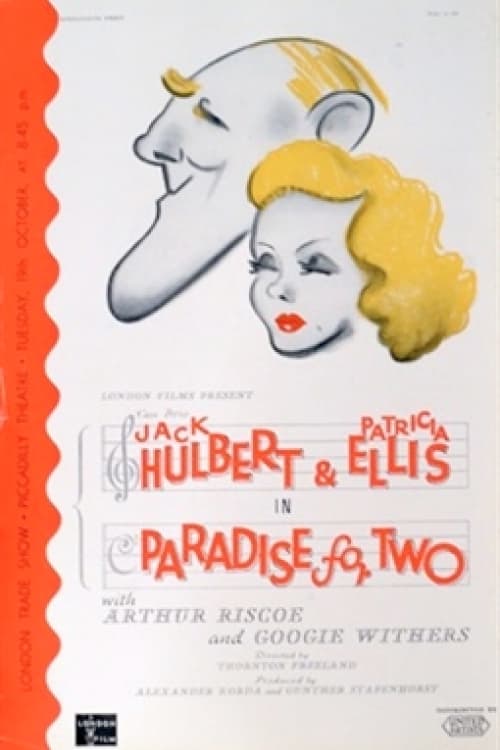
Paradise for Two
1937
No user ratings available yet
Diversity score: 2.4 out of 10

1936
NRDirector
Joseph Santley
Runtime
58 minutes
Average Rating
No ratings yetSynopsis
A girl in search of a rich husband mistakes a millionaire for a male model.
Overall Score
Minimal
Category Breakdown
LGBTQ+ Representation
The film lacks any evidence of non-heteronormative identities or same-sex intimacy. The plot centers on a traditional pursuit of a husband, reinforcing conventional romantic structures.
Gender Representation
The protagonist follows the 'gold-digger' trope, tying her agency to the pursuit of a wealthy partner. This reinforces traditional gendered motivations regarding marriage and economic security.
Racial & Ethnic Diversity
Reflecting 1936 studio standards, the film appears to follow the homogeneous, Western-centric casting typical of the era. There is no indication of a diverse ensemble.
Religious & Cultural Diversity
The narrative focuses on capitalist motivations and social climbing. It operates within a framework of conventional social morality rather than challenging Western institutions.
Disability Representation
There is no evidence of characters with visible or invisible disabilities. The narrative does not address how such identities are handled.
Strengths
Areas for Improvement
AI Analysis
Smartest Girl in Town is a product of 1930s Hollywood, functioning as a standard period comedy that adheres to the social and narrative conventions of its time. The film relies on established tropes of class aspiration and romantic misunderstanding to drive its comedic premise. The narrative lacks the complexity required to meet modern benchmarks for progressive representation. Instead of disrupting social hierarchies, it reinforces them through a story centered on traditional romantic and economic objectives. Ultimately, the film serves as escapist entertainment that mirrors the homogeneous casting and social structures prevalent in the studio system of the mid-1930s.
1937

1934

1936
1933
1934
1937
1940
1937

1937
1927
1936
1939
No reviews yet. Be the first to share your thoughts on this movie!
Use the rating form above to leave a star rating and optional review.