The Foul King
2000
No user ratings available yet
Representation score: 5.0 out of 10
Representation Score
Fair
1998
Director
Shin Seung-soo
Runtime
100 minutes
Average Rating
No ratings yetNew Showbiz Analysis
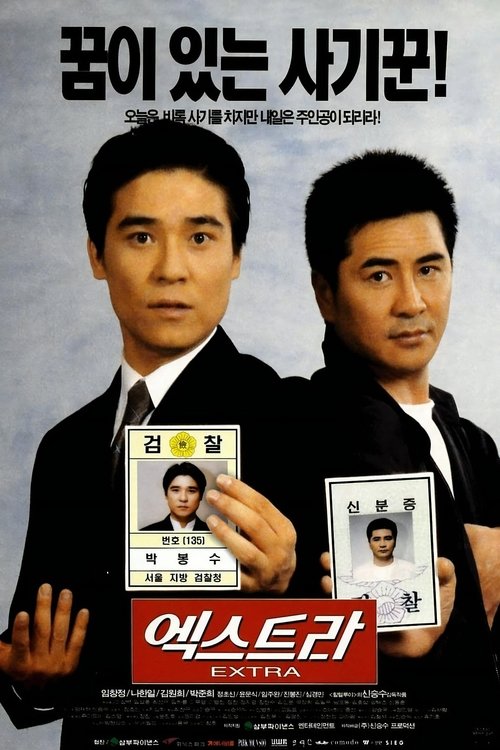
Extra is a character-driven comedy that prioritizes social satire over demographic breadth. The film's strength lies in its narrative deconstruction of authority, using a protagonist's deception to challenge the perceived sanctity of institutional roles. However, the film lacks depth in representing diverse identities. The focus remains heavily on a male-centric professional struggle, and the culturally homogeneous setting limits racial and ethnic diversity. While it avoids active harm, it does not actively represent underrepresented groups. Ultimately, the film succeeds as a critique of social hierarchies and moral relativism, even if it remains narrow in its demographic scope.
Category Breakdown
The film does not include explicit representations of LGBTQ+ characters or identities outside of heterosexuality. The story revolves around professional ambitions and social interactions within a traditional comedic format.
The story centers on the male experience of professional struggles and status-seeking. It does not actively challenge traditional gender hierarchies, focusing instead on a male-centric journey of self-presentation.
As a South Korean production from 1998, the film operates within a culturally homogeneous context. It lacks ethnic diversity but does not show evidence of racial stereotyping or whitewashing.
The story critiques the effectiveness of formal legal institutions through satire. It suggests that justice can be pursued through individual action and deception rather than through established systemic channels.
There are no visible or invisible disabilities central to the plot or character arcs.
Present on Screen
Limited or Absent
Official Synopsis
Park Bong-soo (Im Chang-jung), a struggling actor stuck with minor roles, dreams of one day landing a lead. One day, he's cast as a prosecutor and is handed a fake but realistic prosecutor ID. While out drinking with fellow actor Kim Wang-gi (Na Han-il), Bong-soo jokingly pretends to be a real prosecutor. To his surprise, people fall for it. Emboldened, he begins impersonating a prosecutor and investigator, going after “social evils” in the name of justice. With the money he earns through these fake stings, he even starts producing his own film. But how long can the act last before reality catches up?
2000

1999
1997
1982

2022
1960

2023
2005
No reviews yet. Be the first to share your thoughts on this movie!
Use the rating form above to leave a star rating and optional review.