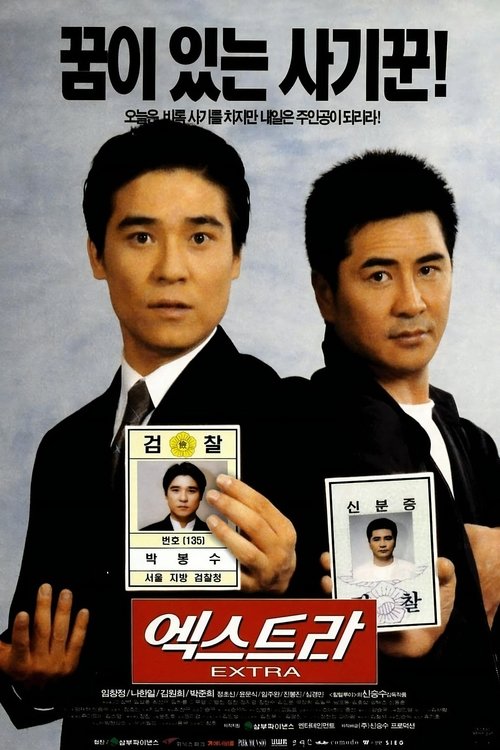
Extra
1998
No user ratings available yet
Representation score: 4.9 out of 10
Representation Score
Good
1997
Director
Shin Seung-soo
Runtime
98 minutes
Average Rating
No ratings yetNew Showbiz Analysis
Hallelujah is a character-driven comedy that satirically deconstructs religious authority. By focusing on a swindler taking on a pastor’s role, the film explores themes of institutional sincerity and subjective morality. However, the film lacks depth in addressing multiple aspects of identity. It uses a medical condition—a coma—as a plot device, which may oversimplify the portrayal of physical vulnerability. Ultimately, while the film offers a clever critique of organized faith, it remains a relatively narrow character study without significant engagement with diverse demographics.
Category Breakdown
The film does not include any explicit LGBTQ narratives or non-straight identities. Its focus on religious deception keeps it neutral regarding these themes.
Although the cast includes prominent actresses like Choi Ji-woo, the story focuses on the protagonist’s deception. It is unclear if female characters have significant roles or challenge traditional hierarchies.
As a South Korean production, the film operates in a culturally homogeneous setting. It maintains typical regional representation without whitewashing or racial stereotypes.
The story uses satire to deconstruct religious institutions. By having a swindler take on a pastor's role, it critiques traditional spiritual authority.
The plot employs a character in a coma as a central device for deception. This approach risks treating a medical condition as merely a tool for the protagonist’s benefit.
Present on Screen
Limited or Absent
Official Synopsis
A swindler and pickpocket pretends to be a pastor in a coma for money.
1998

1997

2017

2006
1987

2007

2019

2004
No reviews yet. Be the first to share your thoughts on this movie!
Use the rating form above to leave a star rating and optional review.