Sirocco
1938
No user ratings available yet
Representation score: 3.0 out of 10
Representation Score
Minimal
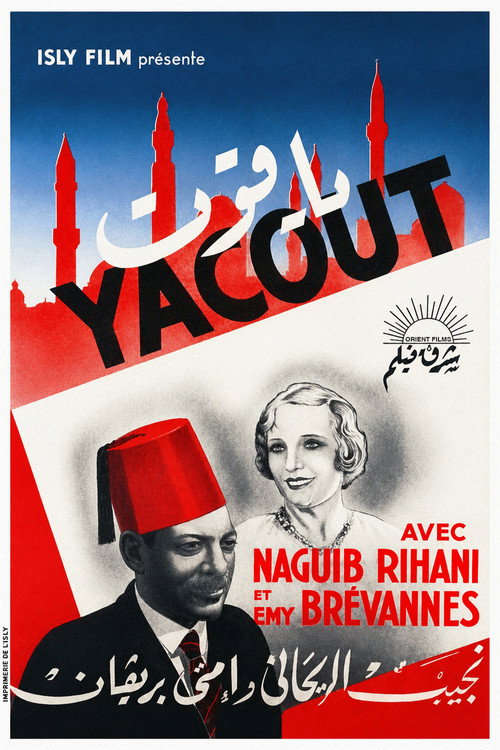
1934
Director
Naguib ElRihani, Willy Rozier
Runtime
80 minutes
Average Rating
No ratings yetNew Showbiz Analysis
Yacout transposes a French play into 1930s Cairo, using a male professor’s moral slide to critique corruption and cultural clash. The film’s cultural satire is its strongest representational feature, foregrounding Arab society and Western influence. Gender and identity representation are minimal. Women are peripheral romantic figures, and there is no LGBTQ+ or disability presence. The cast is almost entirely Arab, with no meaningful racial diversity. The overall score reflects limited inclusion: cultural critique is present, but the film reinforces traditional gender roles and excludes marginalized identities.
Category Breakdown
No LGBTQ+ characters or same-sex relationships appear. The film centers on heterosexual social comedy in 1930s Cairo, with no queer subtext or representation.
The narrative is driven by men, especially the male professor. Women appear only as romantic interests or background figures without narrative power or agency.
The cast is predominantly Egyptian and Arab. The adaptation localizes a French play but does not include significant racial mixing or non-Arab leads.
The film contrasts Western and Arab cultural codes, satirizing social climbing and corruption. It shows how foreign influence tempts a naive man into moral compromise.
No characters with physical or mental disabilities are depicted. The comedy relies on mistaken identities and social maneuvering rather than disability themes.
Present on Screen
Limited or Absent
Official Synopsis
The film is an Egyptian adaptation of a play by Marcel Pagnol, transposed into an Egyptian and Arab context. It follows the story of a shy, naive professor who allows himself to be exploited by an aristocrat or influential figures—depending on the interpretation—in a gambling scheme or a con. As the plot unfolds, the professor undergoes a moral transformation, coming to accept and eventually adopt behaviors that were initially alien to his nature. The narrative explores two central themes: the temptation of corruption and the clash of cultural codes—specifically between Western culture and the Arab/Cairene society depicted in the film.
1938

1930
1968
1955
1933
1938
1973
1922
No reviews yet. Be the first to share your thoughts on this movie!
Use the rating form above to leave a star rating and optional review.