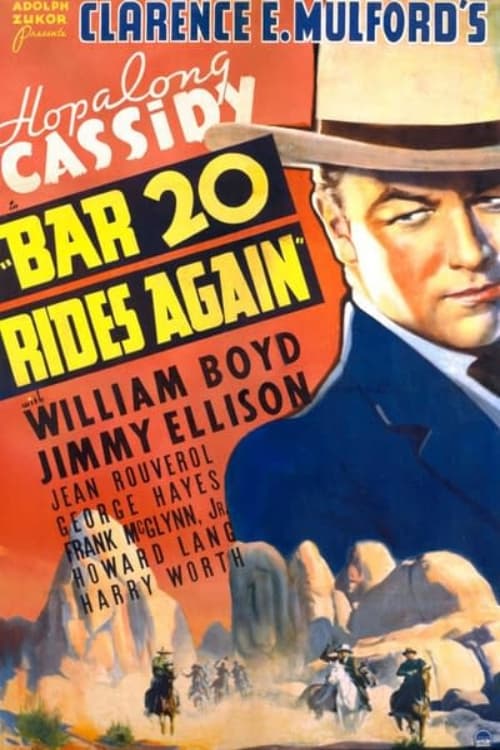
Bar 20 Rides Again
1935
No user ratings available yet
Representation score: 0.3 out of 10
Representation Score
Minimal
1937
ApprovedDirector
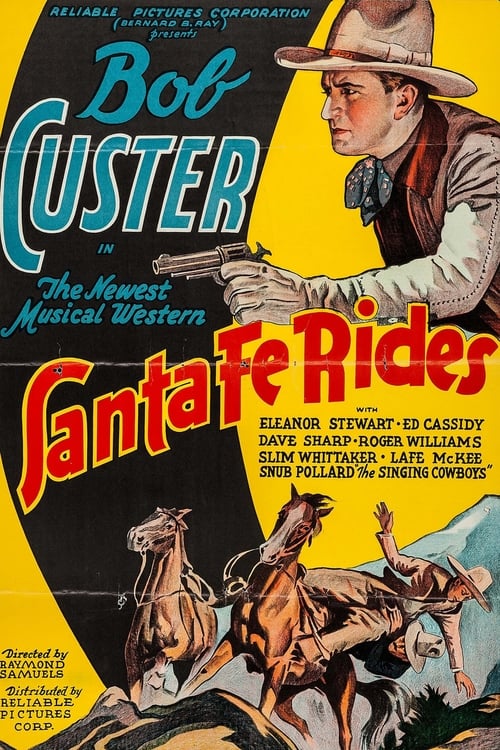
Bernard B. Ray
Runtime
58 minutes
Average Rating
No ratings yetNew Showbiz Analysis
Santa Fe Rides is a quintessential 1930s B-movie Western that prioritizes genre conventions over social complexity. The plot revolves around masculine camaraderie, musical talent, and a standard romantic conflict, leaving little room for diverse perspectives. The film reinforces the era's traditional hierarchies. Gender roles are strictly defined by romantic competition, and the racial landscape appears largely homogeneous, mirroring the standard frontier archetypes of the period. Ultimately, the production serves as a snapshot of traditionalist cinema, focusing on straightforward morality plays rather than progressive narratives.
Category Breakdown
The film follows a traditional romantic rivalry between a male protagonist and an antagonist, reinforcing standard heterosexual clichés without any indication of non-binary gender identities.
Narrative ability to act is concentrated among the male cowboys and their leader. While Carol Sheldon is central to the plot, she functions primarily as a romantic prize rather than an independent agent.
The setting and character archetypes suggest a predominantly Anglo-Saxon cast. Despite the inclusion of Sherry Tansey, the film reflects the homogeneous social structures typical of 1930s Westerns.
The story operates within conventional Western morality, focusing on ranch life and individual honor, adhering to the established social and moral frameworks of the era.
There are no visible or invisible disabilities depicted among the primary characters in this production.
Present on Screen
Limited or Absent
Official Synopsis
The Transcontinental Broadcasting Company sends a sound truck and equipment to a ranch to obtain an audition from "Santa Fe" Evans and his musical cowboys (Oscar Gahan, Lloyd Perryman, Robert "Curley" Hoag, Rudy Sooter and Sherry Tansey.) Carver, arch enemy of Evans and a rival for the love of Carol Sheldon, fails in an attempt to spoil the audition. Carver frames Mr. Sheldon and Carol's brother Buddy on a charge, by Al Jensen, of receiving cattle stolen from him by Evans. Carver blames Evans for all of the Sheldon's troubles and, what with one thing or another, it looks like Evans and his cowhands will miss the big broadcast.
1935
1953
1939
1937
1937
1929
1935
1939
No reviews yet. Be the first to share your thoughts on this movie!
Use the rating form above to leave a star rating and optional review.