Cats A-Weigh!
1953
No user ratings available yet
Diversity score: 1.4 out of 10
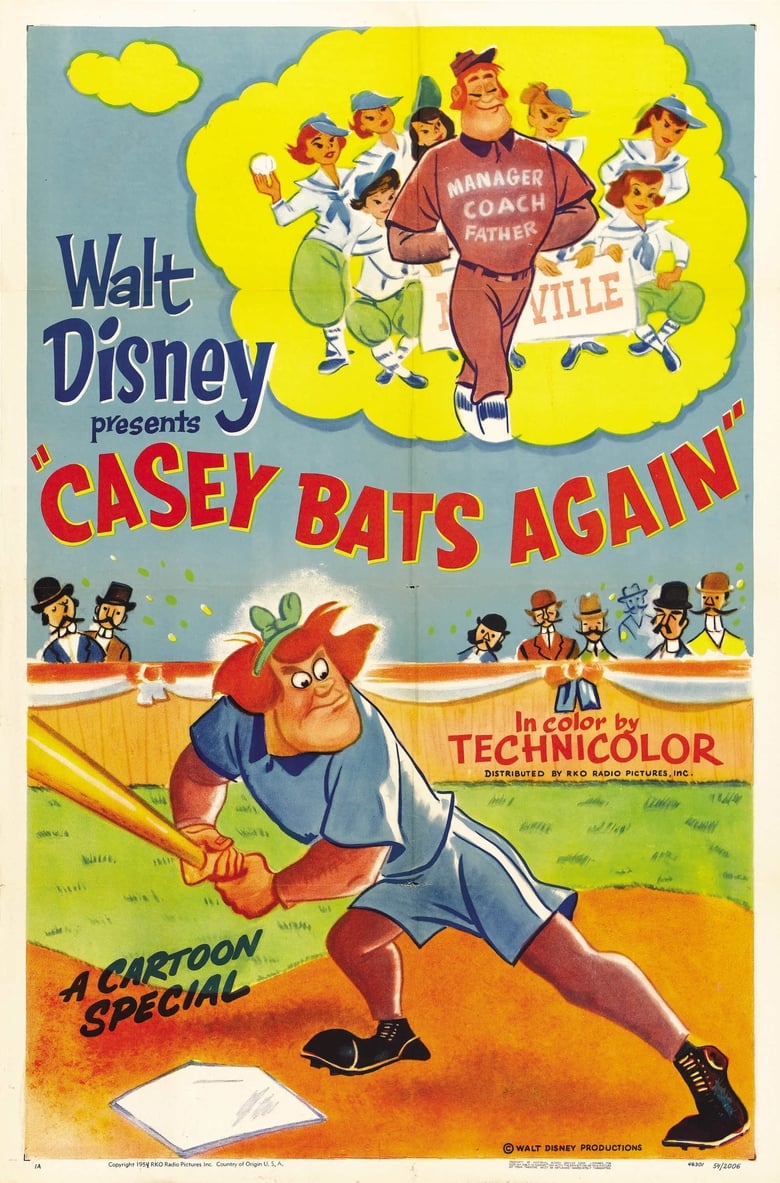
1954
Director
Jack Kinney
Runtime
8 minutes
Average Rating
No ratings yetSynopsis
Casey is upset about having struck out his last chance at bat but his wife suggests they have a son to follow in their dad's footsteps. Eventually, a child is born but, to Casey's dismay, it's a girl, not a boy. His wife suggests they try again several more times but each time, it's still another girl. Casey is depressed but his pals tell him that in spite of everything, they still make a powerful baseball team. Casey likes the idea and accepts. However, the day of the big game, he is nervous that one of them will strike out and attempts to make the last home run himself disguised as one of his own daughters.
Overall Score
Minimal
Category Breakdown
LGBTQ+ Representation
The story centers on a traditional heteronormative marriage. There are no depictions of non-cisnormative identities or same-sex intimacy.
Gender Representation
The plot ties the protagonist's identity to producing a male heir. Female characters serve as facilitators for his legacy, and the birth of daughters is framed as a disappointment.
Racial & Ethnic Diversity
The film lacks significant racial or ethnic diversity. It focuses on a homogeneous domestic setting typical of 1950s mainstream animation.
Religious & Cultural Diversity
The narrative reinforces mid-century Western family structures and patriarchal lineage. It operates entirely within the framework of conventional social expectations.
Disability Representation
The film contains no information regarding characters with physical, neurodivergent, or mental health conditions.
Strengths
Areas for Improvement
AI Analysis
Casey Bats Again is a product of its era, strictly adhering to mid-century social hierarchies. The narrative architecture prioritizes patriarchal expectations, using the birth of daughters as a comedic device for the male lead's frustration rather than exploring female agency. The film lacks any meaningful representation of diverse identities. It relies on standardized character archetypes and traditional domestic tropes that reinforce the status quo of 1954 American media. Ultimately, the story functions to uphold conventional social norms, treating deviations from the masculine ideal as a source of comedic conflict.
1953
1942

1954
1944
1954
1946

1949
1956
1948

1944
1935
1957
No reviews yet. Be the first to share your thoughts on this movie!
Use the rating form above to leave a star rating and optional review.