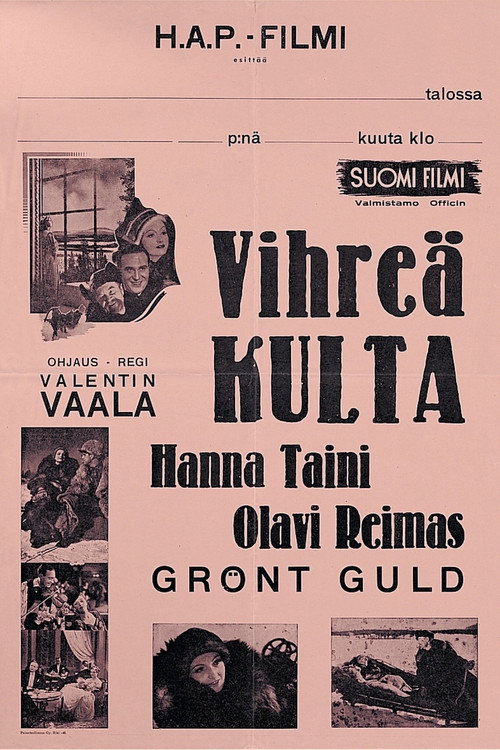
Vihreä kulta
1939
No user ratings available yet
Representation score: 3.2 out of 10
Representation Score
Limited
1938
Director
Valentin Vaala
Runtime
84 minutes
Average Rating
No ratings yetNew Showbiz Analysis
The film is a product of its specific historical and geographic context, offering a narrow demographic scope. It lacks modern markers like LGBTQ+ or racial diversity, which keeps the overall score low. However, the film provides meaningful representation of women as capable managers of economic and social continuity. By centering the narrative on women's management of the estate, it challenges the idea of women as purely passive figures in a patriarchal society. Ultimately, the work is a study of social realism and domestic ability to act, balancing traditional period values with a progressive look at gendered resilience.
Category Breakdown
The film follows traditional structures that assume everyone is straight or cisgender. The central romantic conflict focuses entirely on the male protagonist and his relationships with two women.
Women are central to the narrative, demonstrating resilience and management skills within an agrarian setting. The film portrays women's ability to drive the story as essential to the estate's continuity.
The cast is ethnically homogeneous, reflecting the 1938 Finnish rural setting. There is no diversity in race or ethnicity present in this period piece.
The story explores class complexities and generational duty within the land-owning class. It remains grounded in the traditional values of its era.
There are no documented depictions of physical or neurodivergent disabilities. Characters are defined by social roles and romantic entanglements.
Present on Screen
Limited or Absent
Official Synopsis
Aarne marries Martta because his mother tells him it is his duty as the eldest son to marry a wealthy girl. However, the attractive school teacher Ilona arrives in the village and causes complications when Aarne falls in love with her.
1939

1930
1946

1953
1958

1928
1929

1919
No reviews yet. Be the first to share your thoughts on this movie!
Use the rating form above to leave a star rating and optional review.