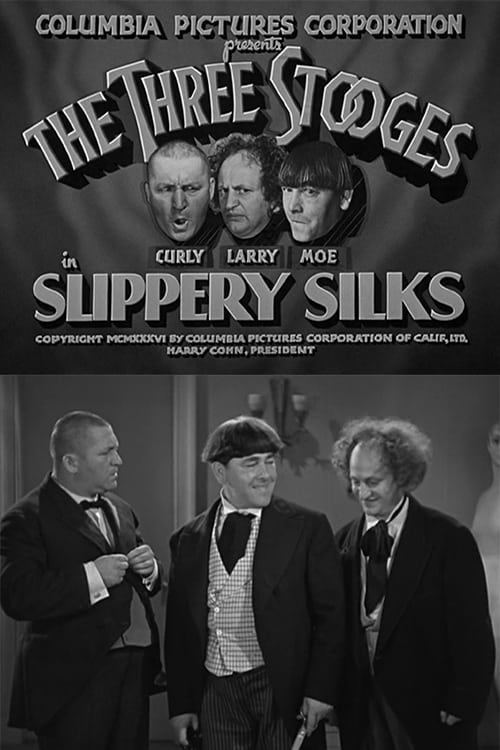
Slippery Silks
1936
No user ratings available yet
Representation score: 1.1 out of 10
Representation Score
Minimal
1937
NRDirector
Jack White
Runtime
19 minutes
Average Rating
No ratings yetNew Showbiz Analysis
This slapstick comedy follows the social and narrative conventions of the 1930s. The plot depends on mistaken identity and physical farce rather than challenging power dynamics. The film does not intentionally address diverse representation. It leans on established comedic archetypes and conventional formulas that support the status quo of its era. Overall, the production is a standard genre entry that prioritizes chaotic situations over diverse character development or social commentary.
Category Breakdown
The film does not include any LGBTQ+ characters or those with non-cisgender identities. It uses conventional gendered clichés, such as a character reacting to perfume.
The story focuses on a male-dominated wrestling environment where female characters are passive objects of desire used primarily for physical comedy.
The narrative depicts a homogeneous social environment without any indication of diverse or non-Anglo-Saxon characters. It reflects the demographic homogeneity typical of 1930s American comedy.
The film operates within traditional capitalist frameworks, such as betting and hierarchical workplace structures. It does not provide any critique of Western institutional norms or cultural structures.
Physical struggle and 'knocking out' opponents are used strictly as comedic devices. There is no portrayal of characters with disabilities having significant roles or complexity.
Present on Screen
Limited or Absent
Official Synopsis
The Stooges become trainers of Bustoff, a champion wrestler. The big boss has a lot of money bet on Bustoff and orders the boys to take good care of him. Instead they accidentally knock him out and Curly must disguise himself as Bustoff and wrestle in his place. The match doesn't go very well until Curly smells "Wild Hyacinth" perfume on a lady fan at ringside. This drives him crazy and he knocks out his opponent and half the people in the stadium.
1936
1926
1938
1943
1935
1940
1955
1937
No reviews yet. Be the first to share your thoughts on this movie!
Use the rating form above to leave a star rating and optional review.