
The Adolescent
1965
No user ratings available yet
Representation score: 5.0 out of 10
Representation Score
Fair
1965
Director
Kōji Wakamatsu
Runtime
88 minutes
Average Rating
No ratings yetNew Showbiz Analysis
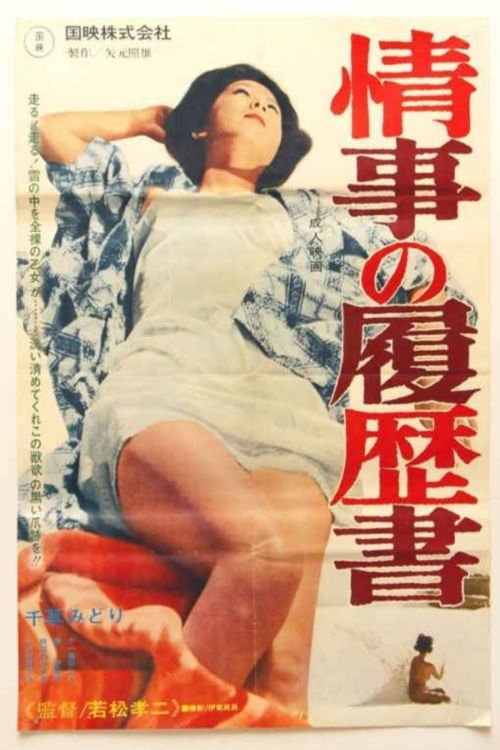
Resume of Love Affairs is a transgressive work that finds its strength in subverting social and gender norms. By focusing on the female experience and the breakdown of traditional morality, it offers a radical departure from the era's standard cinematic clichés. However, the film remains culturally specific to its time and place. It lacks ethnic diversity and explicit LGBTQ+ identities, focusing instead on the fragmentation of human connection within a Japanese context. Ultimately, the film serves as a critique of institutional stability. It prioritizes the ability to act of characters operating outside conventional social bounds over broad demographic representation.
Category Breakdown
The film explores unconventional sexual dynamics and emotional volatility. While it doesn't explicitly include queer identities, it destabilizes traditional heterosexual bonds through its transgressive framework.
The narrative centers on women's ability to drive the story, disrupting traditional hierarchies. Women are shown navigating complex, volatile landscapes rather than being confined to submissive or domestic roles.
The cast is predominantly Japanese, reflecting the demographic norms of 1960s independent cinema. It does not actively seek to diversify the ethnic landscape.
Wakamatsu critiques rigid post-war social structures and conventional morality. The film portrays a world of existential malaise where traditional institutional expectations feel predatory.
There is no documented evidence regarding the portrayal of physical or neurodivergent disabilities in this work.
Present on Screen
Limited or Absent
Official Synopsis
A young girl from a small parochial country village is raped and ravaged at the hands of local roughnecks, escapes to a new life in the big city of Tokyo, and finds a pretty similar fate awaiting her there.
1965

1956
1963

1929
1971

1966

1981

1985
No reviews yet. Be the first to share your thoughts on this movie!
Use the rating form above to leave a star rating and optional review.