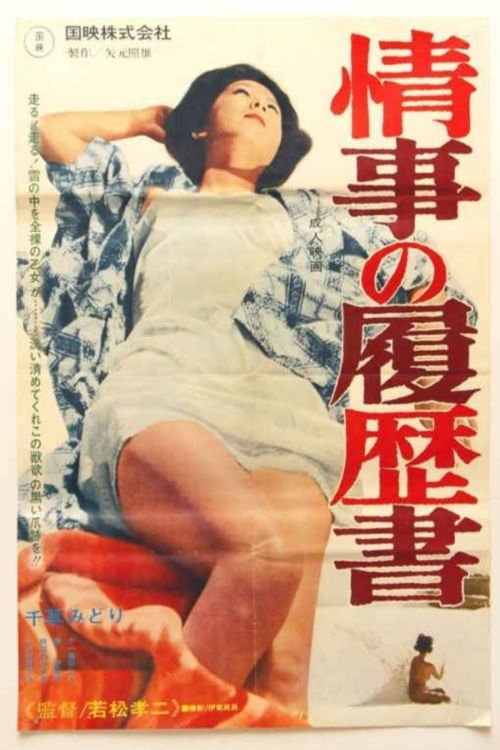
Resume of Love Affairs
1965
No user ratings available yet
Representation score: 5.2 out of 10

Representation Score
Fair
1965
Director
Osamu Yamashita
Runtime
66 minutes
Average Rating
No ratings yetNew Showbiz Analysis
The Adolescent is a psychological drama that prioritizes the deconstruction of the nuclear family over broad demographic diversity. It challenges the stability of traditional domestic and moral institutions common in 1960s Japanese cinema. The film's strength lies in its subversion of passive female archetypes and its critique of the idealized domestic sphere. By focusing on a young girl's loss of innocence and the instability of her caregivers, it moves away from traditional gender roles. However, the work remains culturally localized and lacks diverse racial or explicit LGBTQ+ representation. It functions more as a study of social upheaval within a homogeneous setting than a diverse ensemble piece.
Category Breakdown
The film touches on non-traditional living arrangements that challenge typical family structures. However, it does not show any explicit same-sex intimacy or relationships.
The story focuses on a female protagonist dealing with systemic vulnerabilities and patriarchal violence. It challenges traditional views of motherhood by showing infidelity and domestic instability.
As a 1965 Japanese production, the film operates within a culturally homogeneous context. It examines social upheaval within Japan rather than exploring blended racial identities.
The narrative criticizes traditional institutions by depicting the home and rural life as sources of trauma. It emphasizes personal truth over established social morality and domestic sanctity.
There are no visible or invisible disabilities featured in the main character arcs or plot development.
Present on Screen
Limited or Absent
Official Synopsis
A 13-year-old girl, just beginning to realize her own sexuality, comes home one day and finds her mother having sex with a stranger. Horrified, she runs away from home and heads towards her aunt's house in the country, only to be sexually assaulted along the way by a brutish local man. When she arrives at her aunt's house, she discovers that her aunt and cousin are not quite what she thought they were.
1965

1929
1980

2001

1981

1961

1971
1977
No reviews yet. Be the first to share your thoughts on this movie!
Use the rating form above to leave a star rating and optional review.