
Babette Goes to War
1959
No user ratings available yet
Representation score: 3.0 out of 10
Representation Score
Limited
1983
Director
Jean-Marie Poiré
Runtime
102 minutes
Average Rating
No ratings yetNew Showbiz Analysis
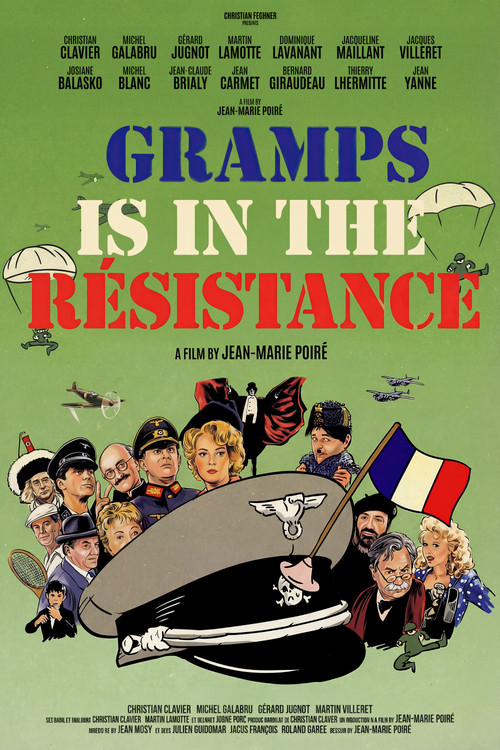
Gramps Is in the Resistance is a historical comedy that focuses on subverting serious war themes rather than diverse representation. While it doesn't show much diversity in terms of race and LGBTQ+ identities, it successfully challenges traditional wartime stereotypes. The film's strength lies in its cultural critique, using chaos and anti-authoritarianism to question the seriousness of patriotism. It replaces the typical stoic soldier with a deceptive, unlikely hero. However, the narrative remains focused on a traditional European family and male-driven conflict, which limits its inclusivity in terms of race and gender.
Category Breakdown
The film does not include any explicit LGBTQ+ characters or stories. It centers on a traditional family during World War II, using typical wartime themes.
The story challenges traditional ideas of masculinity by showing the main character as an incompetent hairdresser. However, the plot still revolves around male-driven conflict and resistance.
Set in 1943 Paris, the film focuses on a French family. It does not have a diverse cast or prioritize non-white representation.
The narrative criticizes social hierarchies and the idea of the family unit. It favors individual rebellion over institutional or state-driven order.
There is no information about the portrayal of physical or neurodivergent disabilities in this film.
Present on Screen
Limited or Absent
Official Synopsis
It is 1943 in Paris. Like so many others, the Bourbelle family's home has been taken over by the Germans and they now live in their cellar. Little do they know that the son, Guy-Hubert Bourdelle, is far from being the cowardly hairdresser he pretends. He is in truth the Germans’ most feared opponent: le super-résistant!
1959

1966

1970

1973
1987
1942

1959
1983
No reviews yet. Be the first to share your thoughts on this movie!
Use the rating form above to leave a star rating and optional review.