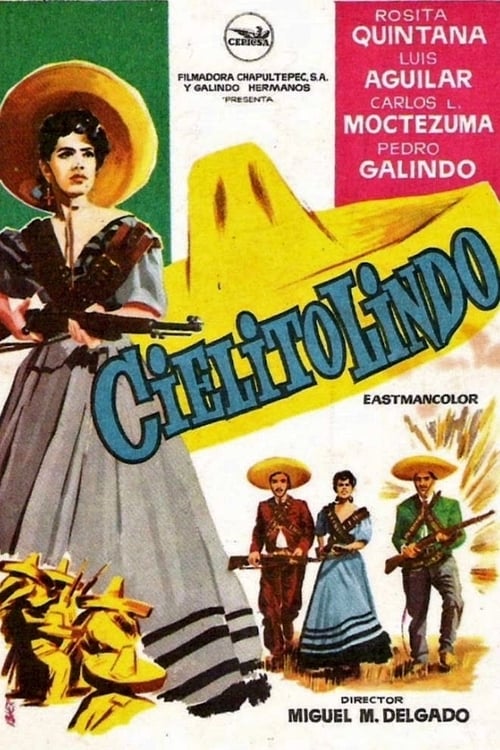
Pretty sky!
1957
No user ratings available yet
Diversity score: 2.9 out of 10

1958
Director
Miguel M. Delgado
Runtime
94 minutes
Average Rating
No ratings yetSynopsis
Rom-com set during Mexican Revolution.
Overall Score
Fair
Category Breakdown
LGBTQ+ Representation
The film adheres to the heteronormative romantic structures typical of 1958 cinema. There is no evidence of same-sex intimacy or non-cisnormative identities.
Gender Representation
Female leads like Rosita Quintana are prominent, yet characters often occupy traditional romantic or domestic archetypes. The musical elements provide some performative agency through song.
Racial & Ethnic Diversity
The film centers Mexican identity and heritage by focusing on the Mexican Revolution. This disrupts the Anglo-Saxon hegemony common in Hollywood Westerns of the era.
Religious & Cultural Diversity
The narrative celebrates Mexican nationalism and historical mythos. It reinforces traditional values regarding family and honor rather than deconstructing Western institutions.
Disability Representation
There is no documented evidence regarding the portrayal of physical or neurodivergent disabilities in this work.
Strengths
Areas for Improvement
AI Analysis
Carabina 30-30 serves as a significant example of the Golden Age of Mexican Cinema, successfully centering a non-Western perspective within the Western genre. By focusing on the Mexican Revolution, it provides a culturally specific alternative to the Hollywood-centric narratives of the 1950s. However, the film remains bound by the social hierarchies of its time. While it offers cultural depth, it relies heavily on traditional gender roles and nationalistic archetypes. The representation is more about reinforcing established cultural identities than exploring intersectional or progressive social dynamics. Ultimately, the film is a genre-driven piece that prioritizes national mythos and romantic tropes over the subversion of traditional social structures.
1957
1951

1963
1966
1967
No reviews yet. Be the first to share your thoughts on this movie!
Use the rating form above to leave a star rating and optional review.