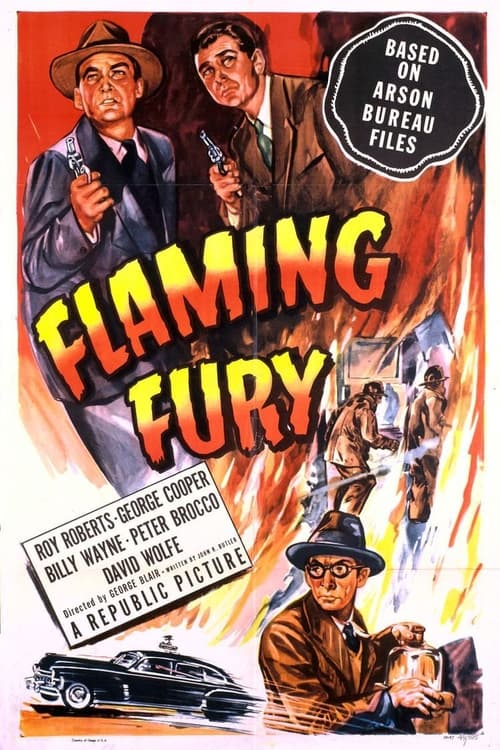
Flaming Fury
1949
No user ratings available yet
No diversity score available
No Poster Available
1949
ApprovedDirector
George Blair
Runtime
60 minutes
Average Rating
No ratings yetSynopsis
A police detective (Robert Armstrong) and his wife (Mae Clarke) adopt the wayward son (Gary Gray) of a slain gangster.
Overall Score
Limited
Category Breakdown
LGBTQ+ Representation
The film lacks LGBTQ+ characters or non-heteronormative identities. The story centers on a detective and his wife, adhering to a conventional domestic framework.
Gender Representation
Gender roles follow traditional mid-century patterns. The male detective holds primary authority, while the female lead's role is defined by her relationship to him.
Racial & Ethnic Diversity
The narrative focuses on a homogeneous group of characters. There is no evidence of significant racial blending or diverse casting within the central arcs.
Religious & Cultural Diversity
The plot reinforces traditional institutions like the police and nuclear family. It prioritizes the restoration of social order over any secular or anti-Western critiques.
Disability Representation
There is no indication of disability being used as a central narrative element. No characters with physical or neurodivergent traits are identified.
Strengths
Areas for Improvement
AI Analysis
Streets of San Francisco is a product of its 1949 production context, emphasizing established social hierarchies. The narrative structure relies on conventional domesticity and institutional authority to drive the crime drama. The film lacks meaningful representation of marginalized groups, instead focusing on a standard nuclear family model. It reinforces the era's status quo rather than challenging social norms. Ultimately, the film serves as a typical genre piece that prioritizes law, order, and traditional gender roles over diversity or systemic critique.
1949
1951
1947

1962

1960

1948
1950

1946

1954

1954
1962

1960
No reviews yet. Be the first to share your thoughts on this movie!
Use the rating form above to leave a star rating and optional review.