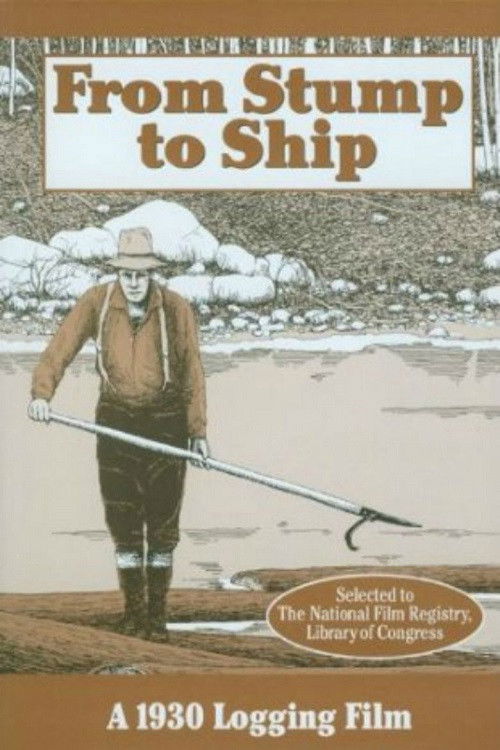
From Stump to Ship
1930
No user ratings available yet
Representation score: 0.2 out of 10
Representation Score
Minimal
1906
Director
Billy Bitzer
Runtime
18 minutes
Average Rating
No ratings yetNew Showbiz Analysis
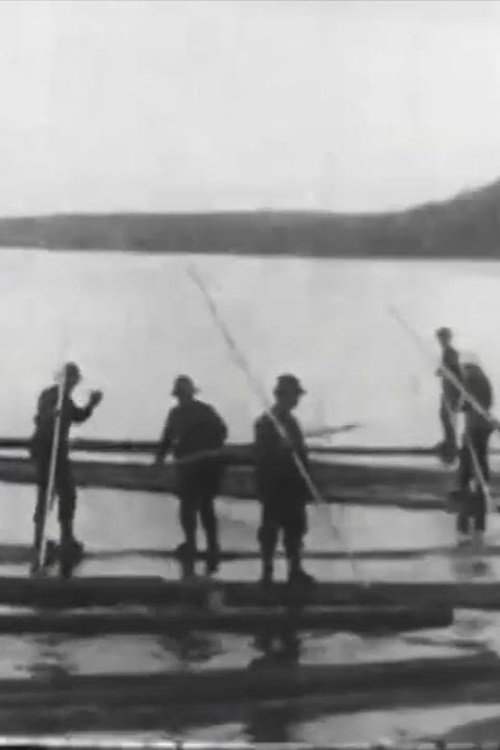
Logging in Maine serves as a record of early 20th-century industrial practices rather than a narrative film. Its purpose is to document a specific labor process involving around a dozen men. This results in a historically accurate portrayal but one that does not engage with modern concepts of identity. The film's structure is defined by its era, focusing on the straightforward depiction of productivity and resource extraction. It lacks intentionality in addressing social issues or overlapping aspects of identity.
Category Breakdown
The film focuses solely on the mechanical and physical aspects of logging. It does not address any queer identities or narratives related to straight relationships.
The film portrays a group of male laborers working together. It adheres to the occupational norms of the time without challenging traditional gender roles.
The cast appears to be a group of white laborers. The film lacks any complexity or diversity in race or ethnicity.
The work presents a traditional view of industrial capitalism and resource extraction. It does not critique Western institutions or consider moral relativism.
There are no visible depictions of physical or neurodivergent disabilities. The focus remains entirely on the physical skills needed for manual labor.
Present on Screen
Limited or Absent
Official Synopsis
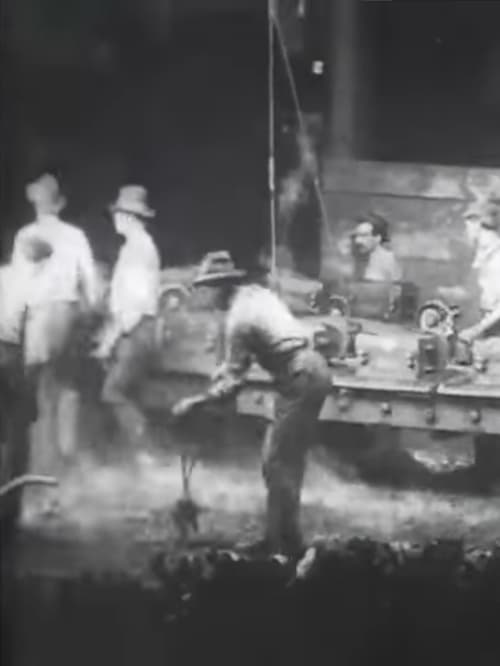
The subject is the movement of cut timber from the forest to the mill. The few scenes that make up the film are loggers performing the various operations necessary to prevent logs from jamming together. The men keep them headed with the flow of the water toward the lake on which the mill is located. The activities of approximately a dozen men were photographed.
1930
2013
1904
1904
1904
1904
1904
1904
No reviews yet. Be the first to share your thoughts on this movie!
Use the rating form above to leave a star rating and optional review.