
Platon
2008
No user ratings available yet
Representation score: 2.6 out of 10
Representation Score
Fair
1984
Director
Albert Mkrtchyan
Runtime
92 minutes
Average Rating
No ratings yetNew Showbiz Analysis
The film provides a nuanced look at domestic instability by challenging the traditional role of the father. By focusing on Ruben's uncertainty and the resulting family fragmentation, it avoids the usual clichés of the strong male leader. While the film does not have explicit LGBTQ+ representation or multi-layered markers, its cultural context provides a unique perspective on family structures. The Armenian and Soviet settings offer a distinct viewpoint on social and family dynamics. Ultimately, the film succeeds in presenting a complex, non-idealized view of the nuclear family, though it remains limited by a lack of diverse character identities.
Category Breakdown
The film does not include explicit LGBTQ+ characters or stories that go beyond the assumption that everyone is straight. The focus is on a traditional family structure dealing with a broken home.
The story challenges the idea of a stable male leader by showing Ruben's instability and his departure from the family. Masculinity is portrayed through emotional struggles rather than strength.
As an Armenian production from the Soviet era, the film offers a non-Western perspective. This setting naturally breaks the mold of depicting Western families as the norm.
The narrative explores a family in crisis through a melancholic lens, moving away from idealized views of the nuclear family. It presents a more cynical view of family life.
There is no mention of characters with physical, sensory, or neurodivergent disabilities within the narrative.
Present on Screen
Limited or Absent
Official Synopsis
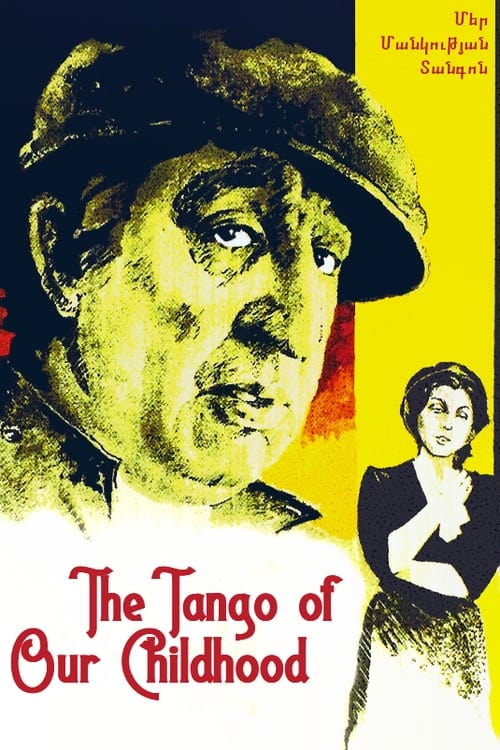
This is a story about the fate of a broken family, about the uncertainty of Ruben, who left his family, about attempts to return father, and about a series of funny, but also sad events that bring this dead-end story to a conclusion.
2008

2002

2004

2017

1982

2004

1975

2002
No reviews yet. Be the first to share your thoughts on this movie!
Use the rating form above to leave a star rating and optional review.