
Wharf Angel
1934
No user ratings available yet
Representation score: 0.8 out of 10
Representation Score
Minimal
1930
PassedDirector
Rupert Julian
Runtime
77 minutes
Average Rating
No ratings yetNew Showbiz Analysis
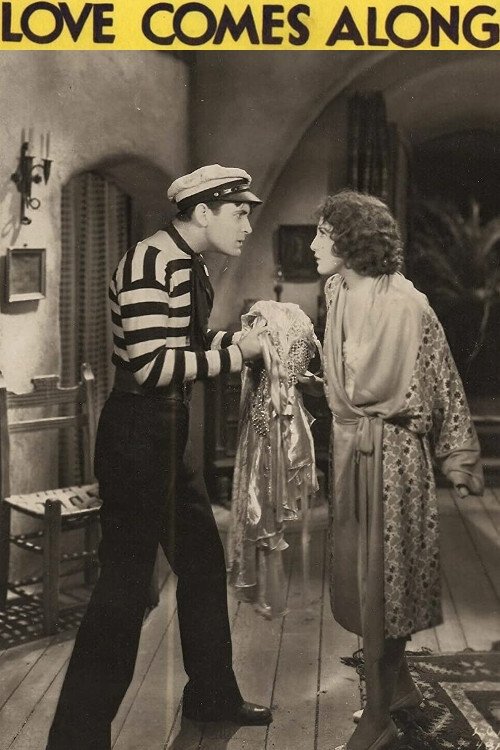
Love Comes Along opens with the stylized dance of a stranded actress, immediately establishing Bebe Daniels as the physical and moral center of this 1930s romantic vehicle. The film’s argument is simple: American virtue and genuine affection triumph over the chaotic, authoritarian excesses of a "seedy" banana republic. Peggy, the caged bird, sings her way out of exile, but the camera’s affection is firmly tied to the traditional rescue narrative. While she negotiates with the dictator, Sangredo, it is Johnny who ultimately breaks her out, reinforcing the idea that her salvation requires male intervention. The sold meaning is that the ideal woman is both physically active and morally pure, while the ideal man is the rugged suitor who overcomes social obstacles to claim her. The film’s internal logic pulls apart slightly when Peggy offers herself to the dictator to save Johnny; this act of self-sacrifice is framed not as a violation of her autonomy but as the height of her moral character. The ending, where the couple escapes on a steamer, rewards their fidelity and shuts out the local power structure, which is treated as a temporary nuisance rather than a systemic reality. The last image is a conventional romantic resolution, affirming the Western default of the couple as the unit of salvation. The film does not challenge the hierarchy of the island; it simply exits it. The local dictator is a comic foil, his power rendered irrelevant by the couple’s genuine connection. This is a pure product of its era, where the "exotic" setting serves only to highlight the moral superiority of the American protagonists. The film’s entertainment value lies in its polished construction and Daniels’ charm, but its cultural argument remains unchallenged and deeply traditional.
Category Breakdown
Absent. The narrative relies entirely on heterosexual romance between Peggy and Johnny, with no queer characters, intimacy, or thematic discussion present in the text or visual framing.
Peggy serves as the moral anchor, using her singing to secure Johnny’s release, yet she remains the prize to be rescued. The film rewards traditional dynamics: the woman offers her body to save the man, who then performs the final heroic act of breaking her out.
The cast is entirely white, with the "banana republic" setting serving only as a backdrop for American characters. Non-white populations are absent from the screen, leaving the colonial power dynamic unexamined and the local populace invisible.
The film treats the American sailor’s return as the ultimate salvation, framing the island’s dictatorship as a temporary inconvenience. Traditional gender roles are reinforced as Peggy sacrifices her autonomy for her partner, while the "foreign" setting remains a hollow stage for Western romantic resolution.
Absent. No characters display physical or cognitive impairments; the narrative focuses on able-bodied athleticism and social grace without engaging with disability as a lived experience or thematic element.
Present on Screen
Limited or Absent
Official Synopsis
An American sailor arrives to a seedy banana republic, where he finds a fellow yank, a stranded girl, as a saloon singer. They become romantically involved, but a misunderstanding about her feelings toward the local dictator threatens their happiness.
1934
1926

1930

1932

1930

1930

1931

1933
No reviews yet. Be the first to share your thoughts on this movie!
Use the rating form above to leave a star rating and optional review.