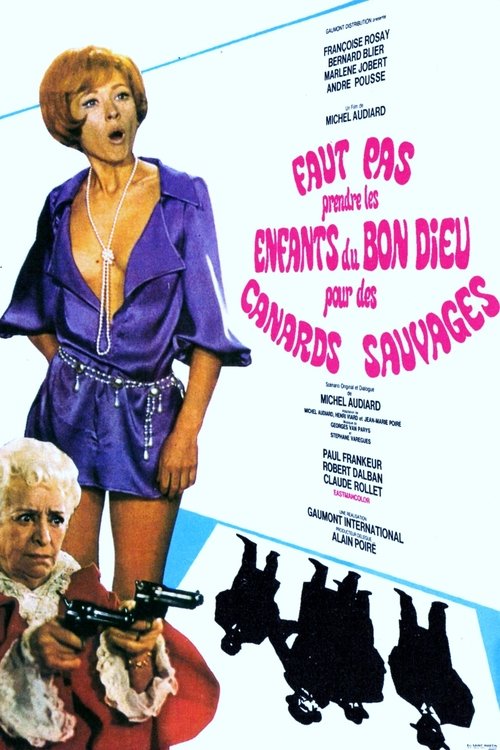
Don't Take God's Children for Wild Geese
1968
No user ratings available yet
Representation score: 4.8 out of 10
Representation Score
Limited
1971
Director
Michel Audiard
Runtime
85 minutes
Average Rating
No ratings yetNew Showbiz Analysis
Michel Audiard’s work explores social non-conformity through the lens of crime and wit. The film centers on Alfred Mullanet, a character who operates on the fringes of conventional society, challenging established economic norms. While the film lacks diverse representation regarding race or sexual orientation, it offers a subtle subversion of gendered power dynamics. By making the protagonist financially reliant on his spouse, the story moves away from traditional patriarchal clichés. Ultimately, the film functions as a character study of social friction. It prioritizes the ability to act of underrepresented figures over the reinforcement of institutional or social norms.
Category Breakdown
The film does not include any characters with LGBTQ+ identities or queer narratives. The story focuses entirely on the central domestic and criminal conflict.
The narrative challenges traditional gender roles by centering a male protagonist who is financially dependent on his wife. This subverts the era's standard depiction of the masculine breadwinner.
The setting suggests a localized French context typical of 1971 crime comedies. The narrative appears to follow the homogeneous social structures of its era without multi-ethnic casting.
The film uses a crime-comedy framework to critique institutional stability. It prioritizes subjective morality by depicting characters living outside standard capitalist productivity.
There is no documented evidence regarding the portrayal of physical or neurodivergent characters in this work.
Present on Screen
Limited or Absent
Official Synopsis
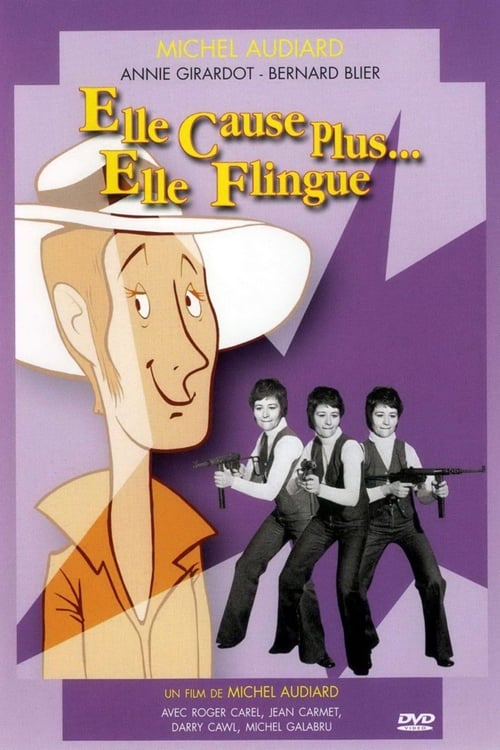
Alfred Mullanet, an unlucky player who lives on his wife's income, becomes in a few moments the object of interest of two thugs, Kruger and Mister K.
1968

1979
1967
1965
1972
1973
1967

1962
No reviews yet. Be the first to share your thoughts on this movie!
Use the rating form above to leave a star rating and optional review.