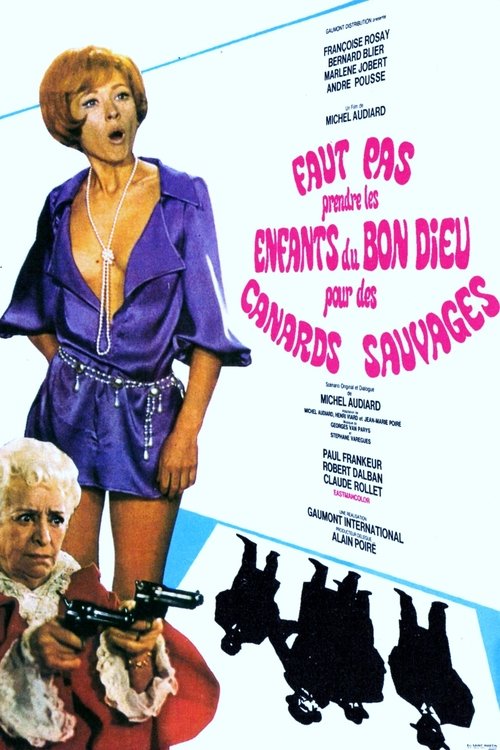
Don't Take God's Children for Wild Geese
1968
No user ratings available yet
Representation score: 4.8 out of 10
Representation Score
Minimal
1965
Director
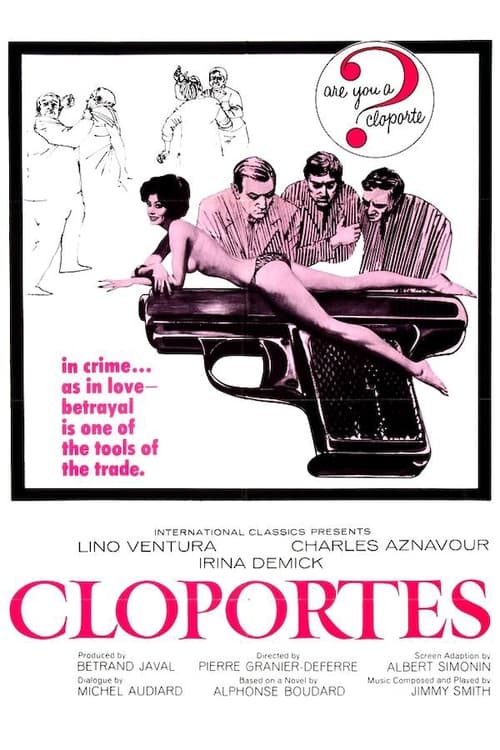
Pierre Granier-Deferre
Runtime
95 minutes
Average Rating
No ratings yetNew Showbiz Analysis
Cloportes is a work of social realism that prioritizes class critique over demographic diversity. It challenges the moral authority of institutions by framing criminal acts as byproducts of socioeconomic neglect. However, the film lacks representation across most identity markers. The narrative is heavily male-dominated and maintains a homogeneous racial profile typical of 1960s French social realism. Ultimately, the film's progressive value lies in its cultural analysis of urban decay rather than its diversity of character identities.
Category Breakdown
The film focuses on a male-centric criminal underworld and the mechanics of a failed heist. There are no LGBTQ+ characters or narratives addressing non-assuming gender matches what was assigned at birth identities.
The narrative ability to act is concentrated among male protagonists within a criminal hierarchy. While domestic life in impoverished settings is depicted, the film lacks significant subversion of traditional gender roles.
The film presents a relatively homogeneous depiction of the French urban working class. There is no evidence of a diverse, multi-ethnic cast disrupting standard 1960s demographic presentations.
The story functions as a naturalist critique of systemic failures and class disparity. It centers on the survival mechanisms of the disenfranchised within an oppressive economic environment.
The film explores the physical and mental toll of extreme poverty. However, no characters with visible or invisible disabilities serve as central plot devices.
Present on Screen
Limited or Absent
Official Synopsis
Three little criminals get a tip for a great coup with lots of money in it. Unfortunately they lack the starting funds to buy the required welding torch. So they persuade their successful colleague Alphonse to join their team. But the well thought-out coup fails, and Alphonse is the only one of them who ends up in jail for several years. When he's released, he's out for revenge.
1968

1964

1982

1958
1981
1960
1967
1966
No reviews yet. Be the first to share your thoughts on this movie!
Use the rating form above to leave a star rating and optional review.