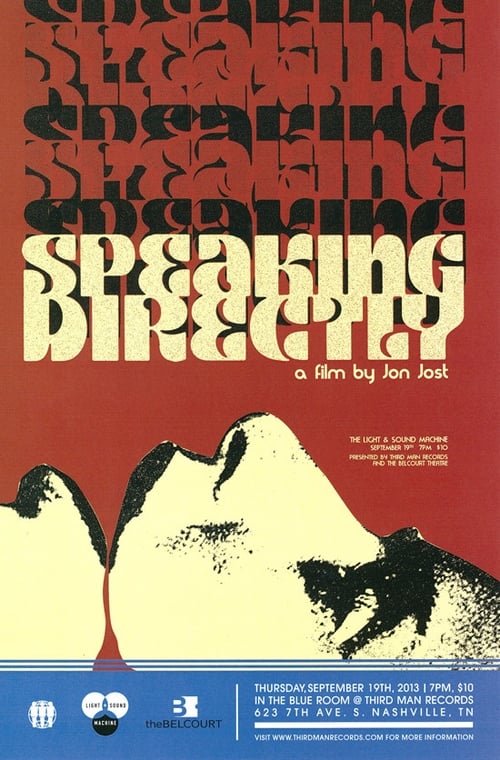
Speaking Directly
1973
No user ratings available yet
Representation score: 5.6 out of 10
Representation Score
Excellent
1987
Director
Jon Jost
Runtime
110 minutes
Average Rating
No ratings yetNew Showbiz Analysis
Jon Jost’s essay-film dismantles the conventional American narrative by using an avant-garde style that emphasizes fragmented, personal accounts. This approach challenges the idea of a single, unified national story. The film succeeds in representing diverse cultures by questioning the surface-level nature of media and institutions. Its refusal to offer a single authoritative voice creates a more dynamic social environment that undermines traditional power structures. However, the film falls short in providing explicit representation of specific underrepresented groups. While it avoids mainstream uniformity, it lacks focused storytelling around LGBTQ+ characters or those with disabilities.
Category Breakdown
The film avoids focusing on straight relationships and traditional pairings through its experimental structure. However, it doesn't show clear stories or intimate moments involving LGBTQ+ characters.
The film disrupts traditional gender roles by not focusing on male dominance or traditional female roles. Instead, it uses fragmented scenes that prevent stable gender roles from forming.
The extensive travel through the American Midwest showcases a wide range of communities. The film offers an authentic look at the local population through real-life subjects.
The film critically examines the stability and uniformity of Western institutions. It presents truth as a mix of personal, often conflicting viewpoints.
The film does not prominently depict characters with physical or cognitive disabilities. It does not place characters with disabilities at the center of the story.
Present on Screen
Limited or Absent
Official Synopsis
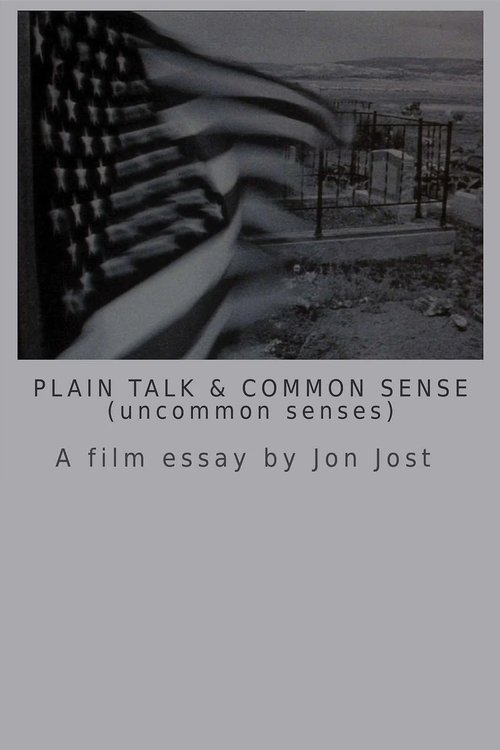
Plain Talk is a complex essay-film, a follow-up a decade and some years later to Speaking Directly, and so another State of the Nation discourse, made for Britain's Channel Four in the year 1986-87. The work involved extensive travel around the United States, and poses an examination of just what America is/was, or what do we mean when we speak of it. Done in a series of radically different sections which collide with each other in a manner intended to provoke thinking, Plain Talk, which was made by an American and intended for American viewers, was indeed broadcast in Britain, but somewhat predictably, not in the USA.
1973

1983
1982
1965

2003

2015

1997

2018
No reviews yet. Be the first to share your thoughts on this movie!
Use the rating form above to leave a star rating and optional review.