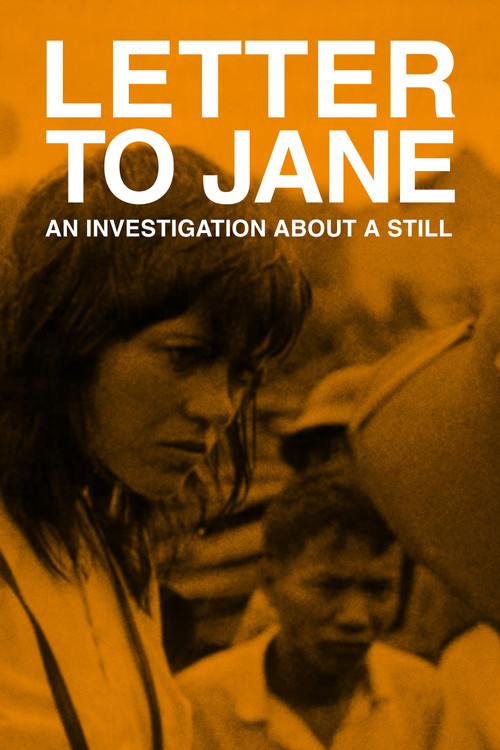
Letter to Jane: An Investigation About a Still
1974
No user ratings available yet
Representation score: 3.7 out of 10
Representation Score
Fair
1973
Director
Jon Jost
Runtime
110 minutes
Average Rating
No ratings yetNew Showbiz Analysis
Jon Jost’s essay film serves as a counter-hegemonic critique of the American state during the Vietnam and Watergate eras. It succeeds by deconstructing dominant cultural narratives and prioritizing the perspective of a former federal prisoner over traditional state-sanctioned leaders. While the film excels at systemic critique and challenging institutional power, it lacks explicit demographic markers. The narrative focus remains on political and personal intersections rather than specific representations of race, gender, or sexual orientation. Ultimately, the work functions as a postmodernist interrogation of authority. It trades conventional character diversity for a radical disruption of national identity and political hegemony.
Category Breakdown
The film focuses on political identity rather than specific sexual orientations. There are no explicit depictions of LGBTQ+ character arcs or same-sex relationships.
The film challenges traditional gender roles by centering an anti-establishment female protagonist. This disrupts the patriarchal structures of 1970s American politics.
The work addresses the systemic issues of the Vietnam War era. However, it lacks specific depictions of racial diversity or a non-white majority cast.
The film critiques U.S. government and military institutions through an anti-establishment lens. It emphasizes subjective truth over official state narratives and Western dominance.
The film does not provide specific details about the depiction of physical, neurodivergent, or mental health disabilities.
Present on Screen
Limited or Absent
Official Synopsis
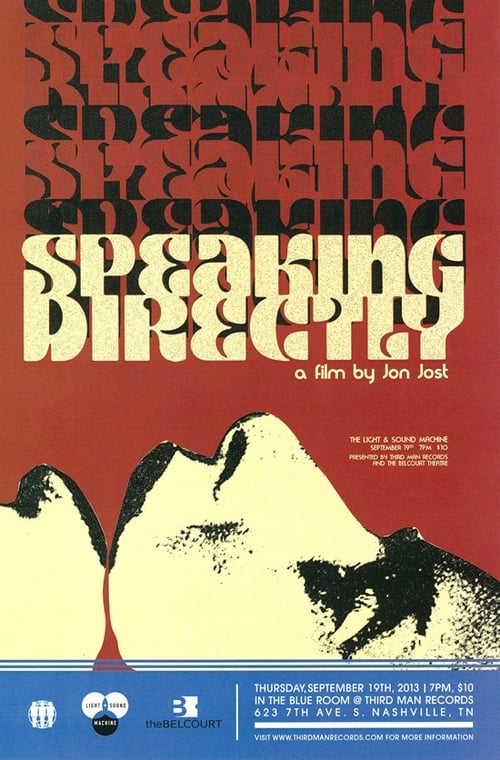
Speaking Directly is an essay-film making for a kind of State of the Nation address, from the perspective of someone other than the President of the United States, circa 1973-5. This film addresses both the political and cultural situation of the US at the height of the Viet Nam war, Watergate and its aftermath, and likewise addresses the personal life, in this context, of the filmmaker, at that time thirty years of age, recently out of two plus years in federal prison for refusal to accept military service.
1974
2012
1969

1970
1979
1975
1970
1976
No reviews yet. Be the first to share your thoughts on this movie!
Use the rating form above to leave a star rating and optional review.