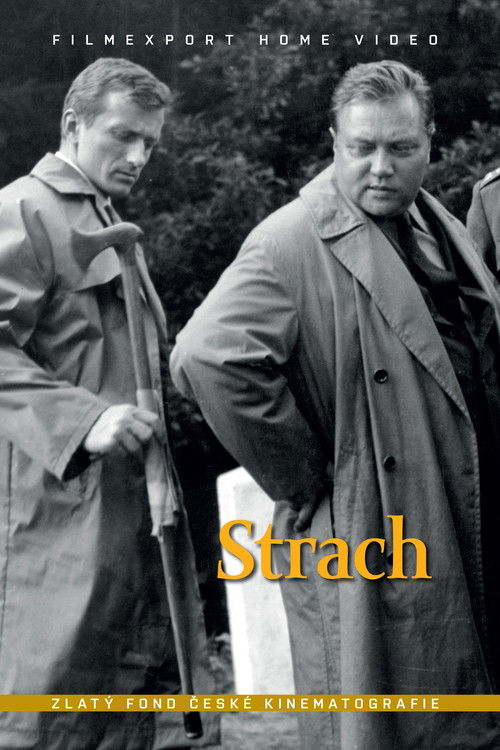
Fear
1964
No user ratings available yet
Representation score: 2.4 out of 10
Representation Score
Minimal
1980
Director
Jiří Hanibal
Runtime
84 minutes
Average Rating
No ratings yetNew Showbiz Analysis
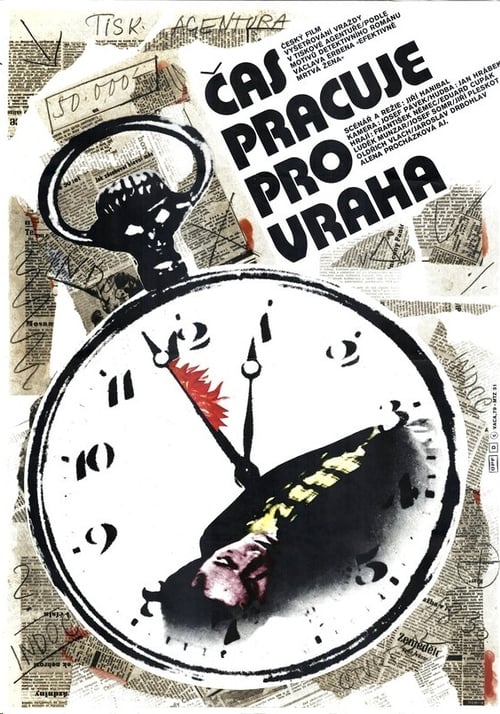
Čas pracuje pro vraha is a traditional crime procedural that adheres to the genre conventions of its 1980s era. The narrative relies on established clichés, such as the 'dead wife' catalyst, which limits the roles of female characters and keeps the focus on a male-dominated investigative framework. The casting and setting are highly localized and homogeneous, reflecting a specific regional social circle without broader representation. This lack of diversity in race, gender roles, and identity results in a narrow demographic scope.
Category Breakdown
The film does not include any LGBTQ+ characters or stories about non-cisgender identities. The plot revolves around a traditional crime investigation involving a husband and his colleagues.
The story follows a patriarchal structure where the female character, Vera, mainly serves as a plot catalyst through her victimization. Her role is defined by her relationship to her husband rather than by her own actions.
The cast appears homogeneous and reflects the specific regional setting. There is no indication of diverse racial casting or the inclusion of non-white characters.
The film operates within a standard procedural framework centered on state-adjacent institutions like the IDOC ability to act. It lacks explicit critiques of religion or complex moral relativism.
There is no indication of characters with visible or invisible disabilities. The narrative does not feature neurodivergent individuals or those living with chronic illnesses.
Present on Screen
Limited or Absent
Official Synopsis
Vera, wife of the plumber Simandl (Josef Somr), is found murdered in the cinema next to the IDOC (Information and Documentation) agency where she worked. Police captain Marha (Frantisek Nemec), who is leading the investigation, is informed by Simandl that on the day of the murder Vera promised to bring home fifty thousand crowns to buy a car. Marha's primary suspects are the three men working at the agency: deputy editor-in-chief Brandl (Jirí Pleskot) and editors Pernata (Eduard Cupák) and Remes (Ludek Munzar, and of course also Simandl.
1964
1983
1971

1981
1972
1971
1959
1971
No reviews yet. Be the first to share your thoughts on this movie!
Use the rating form above to leave a star rating and optional review.