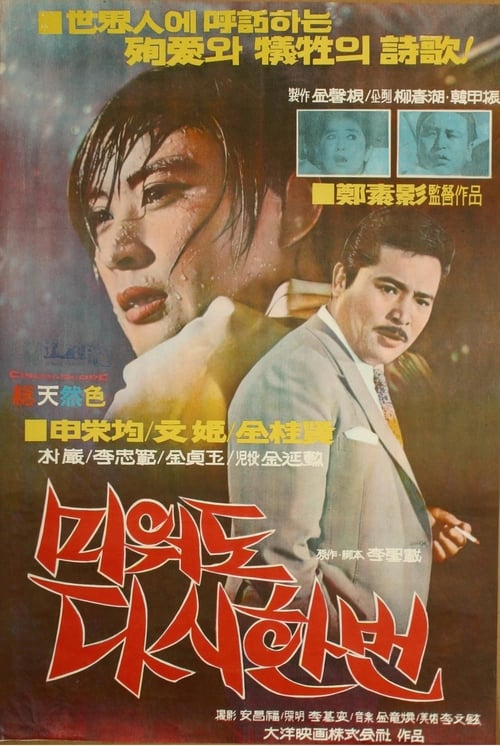
Love Me Once Again
1968
No user ratings available yet
Representation score: 3.0 out of 10
Representation Score
Limited
1968
Director
Lee Man-hee
Runtime
74 minutes
Average Rating
No ratings yetNew Showbiz Analysis
Lee Man-hee’s drama is a localized social realist study of 1960s South Korea. It shifts the focus from traditional male-centric narratives to the internal struggles of a woman facing unplanned pregnancy and economic instability. While the film adheres to the demographic norms of its time, it offers a crucial non-Western viewpoint. By avoiding simple moralizing, it highlights how systemic poverty affects individuals and traditional families. Ultimately, the film excels in its realistic portrayal of socio-economic hardship, though it lacks representation for LGBTQ+ identities or characters with disabilities.
Category Breakdown
The film focuses on a heterosexual couple dealing with poverty and pregnancy. There is no representation of non-straight or non-cisgender identities, nor any critique of the assumption that everyone is straight or cisgender.
The story centers around the female protagonist's role as she considers her readiness for motherhood. The emotional burden falls on her as she evaluates her situation, while the man seeks financial assistance.
This South Korean film provides a unique non-Western perspective. The cast is ethnically uniform, reflecting the cultural context of 1968 Korea.
The story challenges the idea of idealized domesticity by presenting parenthood through the lens of scarcity and inadequate systems. It focuses on economic structures rather than traditional family stability or prosperity.
There is no depiction of characters with visible or invisible disabilities in the film.
Present on Screen
Limited or Absent
Official Synopsis
One Sunday, a penniless unmarried young South Korean couple meet, as they do every Sunday; while the pregnant young woman believes they are not ready to bring a child into the world, the young man decides to go visit his friends to borrow money for delivery.
1968

1953

1960

1966

2023
1960

2013
1961
No reviews yet. Be the first to share your thoughts on this movie!
Use the rating form above to leave a star rating and optional review.