
Right Now, Wrong Then
2015
No user ratings available yet
Representation score: 3.9 out of 10
Representation Score
Good
2017
Director
Hong Sang-soo
Runtime
91 minutes
Average Rating
No ratings yetNew Showbiz Analysis
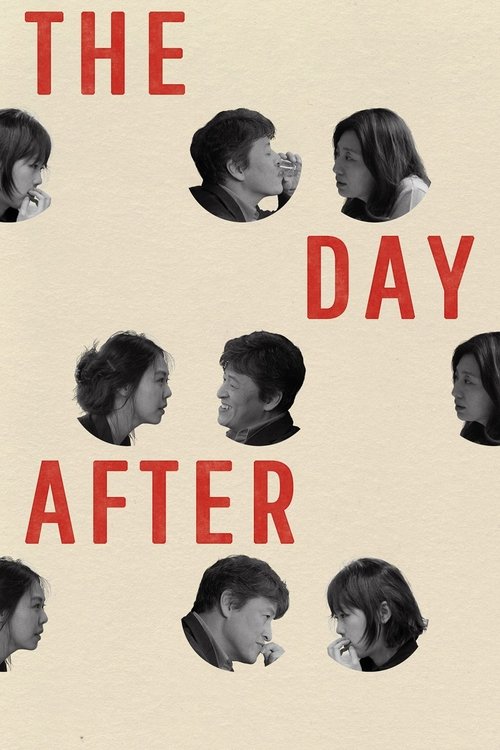
Hong Sang-soo’s *The Day After* is a psychologically driven drama that prioritizes formal sophistication and moral relativism over broad demographic representation. The film excels at capturing the nuances of human interaction and the subtle complexities of gendered social etiquette. However, the narrative remains largely confined to traditional social frameworks. It lacks representation for LGBTQ+ identities and disability, focusing instead on a homogeneous South Korean social setting. Ultimately, the film is a localized study of the human condition. It trades broad-scale representation for a deep, observational look at how individuals navigate social facades and subjective truths.
Category Breakdown
The film focuses on traditional heterosexual relationships and does not include explicit representations of non-binary gender identities or critiques of traditional relationship structures.
Women are portrayed with complexity, moving beyond submissive roles to highlight the tension between societal expectations and personal ability to act. The narrative emphasizes subtle power dynamics in both domestic and professional settings.
The cast is predominantly of a single ethnicity, reflecting a specific South Korean social context. The film avoids Western stereotypes by presenting a localized, authentic cultural perspective.
The film adopts a secular, human-focused worldview through moral relativism. It prioritizes everyday, private interactions over institutional or religious authority to challenge absolute truths.
The film does not significantly address visible or invisible disabilities. Characters operate within standard physical and neurotypical parameters without disability being a central theme.
Present on Screen
Limited or Absent
Official Synopsis
On her first day at work, Ahreum replaces a woman who broke up with the boss. The wife of the boss finds a love note, bursts into the office, and mistakes Ahreum for the other woman.
2015

2012
1998

2004

2006
2010

2018

2009
No reviews yet. Be the first to share your thoughts on this movie!
Use the rating form above to leave a star rating and optional review.